Planning a Group Trip to St. John: Villas vs. Multiple Hotel Rooms
Group travel on St. John forces a real decision early in the planning process: book one villa and share it, or reserve separate hotel rooms and meet up at the beach. The right answer depends on group size, budget structure, and what kind of trip you're actually trying to have. Neither option is obviously better — they're genuinely different experiences.
This is a guide to thinking through that choice honestly, with specific numbers and logistics for group travel on St. John.
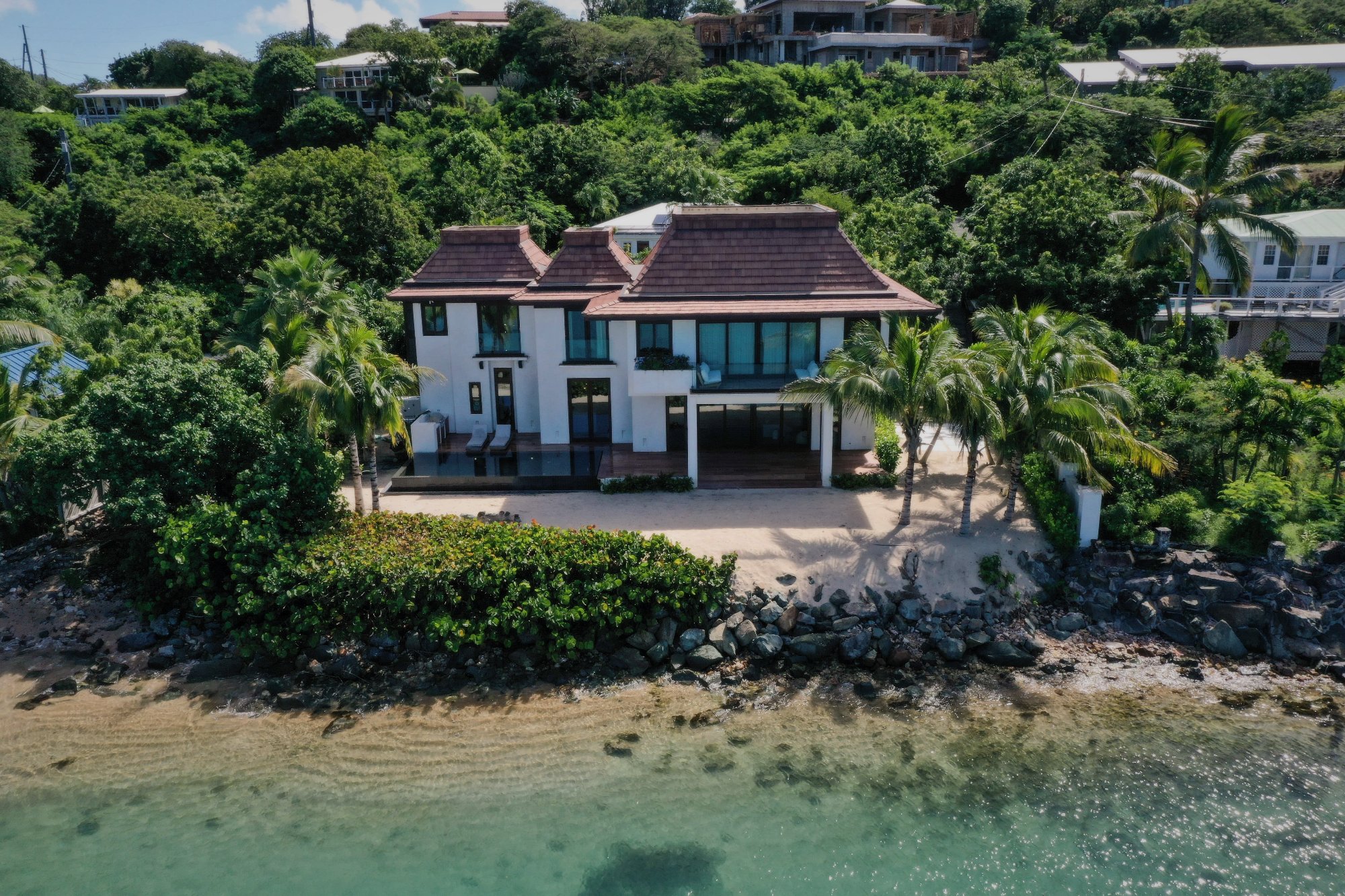
Aerial view of Indo House luxury villa with infinity pool and waterfront terrace on Great Cruz Bay, St. John USVI
What Group Accommodation on St. John Actually Costs
The economics are more nuanced than they first appear.
At the Westin St. John Resort Villas in Great Cruz Bay, a standard room runs roughly $700–$900 per night in high season (November through April). For a group of eight spread across four rooms, that's $2,800–$3,600 per night in accommodation alone — before dining, parking, or resort fees. Peak-season hotel averages on the island reach $1,357 per night for a single room, according to KAYAK data.
Indo House, a four-bedroom private villa in Great Cruz Bay with a capacity of eight guests, starts at $4,000 per night in low season and $4,250 in high season. With a five-night minimum, a high-season group stay runs $21,250 total — roughly $531 per person per night at full occupancy.
The comparison is closer than most people expect. But accommodation is only part of the math. A villa includes a full kitchen; hotel stays do not. For eight people eating three meals a day over five nights, restaurant costs on St. John can easily add $4,000–$6,000 to a hotel-based trip. Factoring that in, the all-in cost of a villa stay is often comparable to four hotel rooms plus dining out, and sometimes lower once meals are factored in.
Where hotels have a clearer financial advantage: smaller groups. A group of four splitting two hotel rooms pays less per person than a group of four renting a four-bedroom villa built for eight.
What a Villa Gives a Group That Hotel Rooms Don't
The cost comparison matters, but it's not the main reason most groups choose a villa. The more significant difference is structural.
Hotel rooms scatter a group. Each couple or pair retreats to their own room at the end of the evening, meets up in the lobby, and navigates the logistics of coordinating eight people across different floors. A villa keeps the group together in a shared house — one kitchen, one dining table, one pool, one outdoor space where everyone lands at the same time.
For extended families, close friends, anniversary trips, and reunion weekends, that shared space is often the point. The communal living areas, the ability to cook breakfast together, the evenings on the pool deck watching the boats in Great Cruz Bay: these are experiences that hotel rooms can't replicate regardless of category.
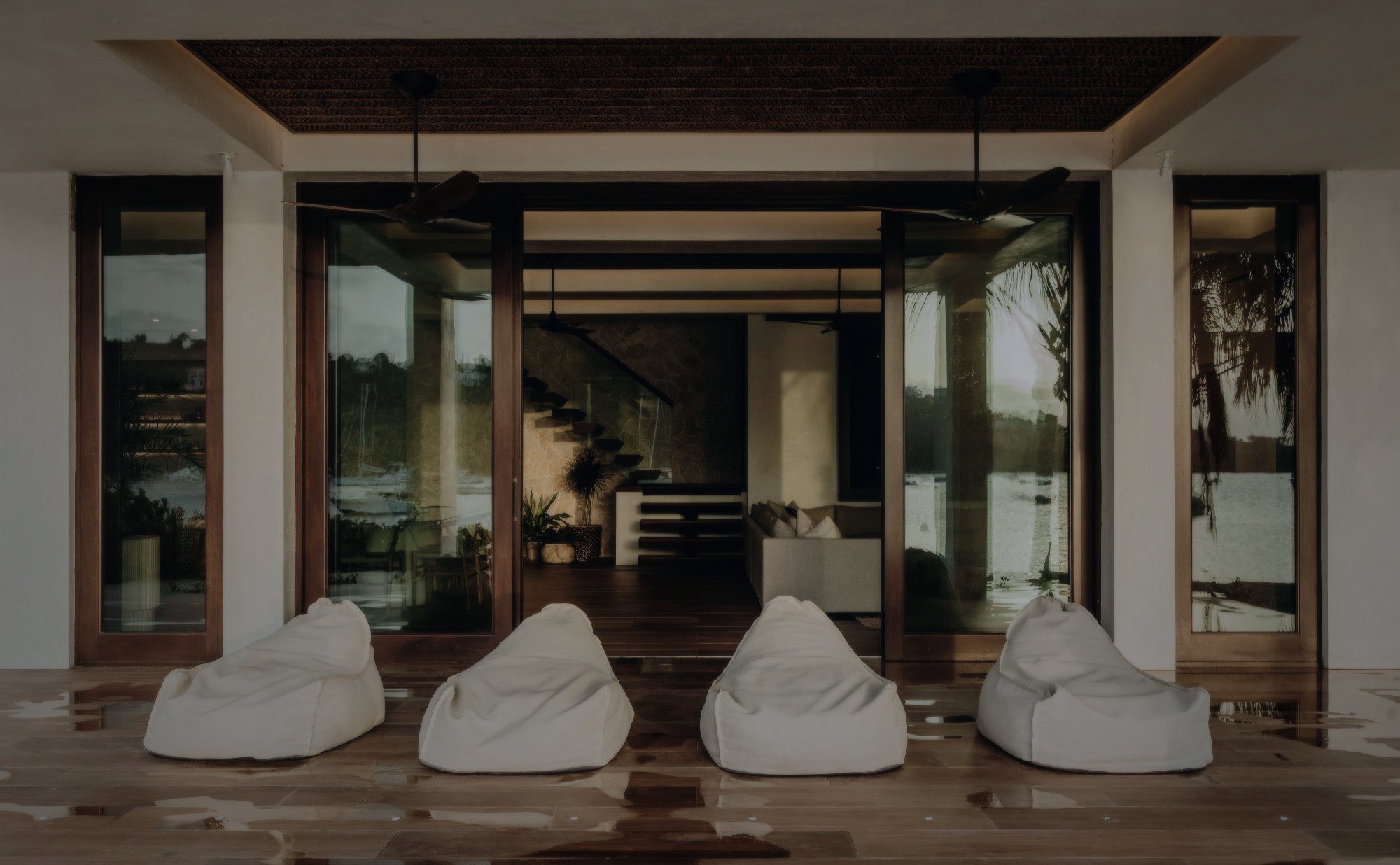
Indo House has four en-suite bedrooms, so each couple or pair has real privacy when they want it. The shared spaces include the open-plan living and dining area, the infinity pool, and the outdoor pavilion directly on the waterfront — all genuinely usable for a group of eight without crowding. That balance of private bedrooms and shared common space is the core advantage of a well-designed villa over a block of hotel rooms.
A full kitchen also changes the rhythm of the trip. Grocery runs to Starfish Market in Cruz Bay, coffee on the terrace before anyone else is up, meals that happen on the group's schedule rather than a restaurant's — these aren't compromises, they're often what returning guests remember most.
Privacy at Scale
One thing villa stays offer that hotel arrangements don't is full-property exclusivity. When a group books Indo House, they have the entire villa: the pool, the waterfront terrace, the pavilion, the indoor living spaces. No other guests, no shared pool deck, no resort lobby where strangers cycle through.
For a reunion group, a multigenerational family, or close friends who haven't been together in years, that exclusivity changes the dynamic. Conversations happen in the open because there's no one else around. The pool is on the group's schedule. Evenings on the pavilion don't require navigating a hotel bar.
At a resort, a group technically shares the property with every other guest staying that week. Common areas, the pool, the beach — all of it is public to the hotel. A group of eight occupies a cluster of rooms, but the experience of the property remains shared.
Indo House sits directly on the waterfront in Great Cruz Bay. The infinity pool faces the bay; the pavilion is fifteen feet from the water. For the duration of the stay, those spaces belong exclusively to the group — not managed by resort staff around a schedule, not adjacent to another group's table. Privacy at this scale is one of the genuine advantages of a private villa over even a very good hotel.
Where Hotels Have the Edge
Group villa rentals involve tradeoffs that are worth naming.
Minimum stays are standard. Indo House requires five nights (seven during the holiday period from December 19 to January 3). For a group looking to do a long weekend, hotel rooms offer flexibility that villas don't.
Villas don't come with daily housekeeping or resort amenities like a fitness center, spa, or concierge desk on-site. Indo House offers private concierge services, which can arrange charters, car rentals, and provisioning before arrival — but these are coordinated in advance, not staffed around the clock.
If anyone in the group has mobility concerns, hotel rooms with accessible features and elevator access are easier to navigate than a multi-level villa with outdoor stairs and uneven terrain.
And resort infrastructure matters for some groups. If the preference is to be within walking distance of multiple restaurants, a pool bar, and nightly entertainment, Cruz Bay's hotel cluster — Gallows Point, the Westin — offers that density.
Logistics for Groups: Ferries, Cars, and Getting Settled
St. John has no airport. Every group arrives by ferry, either from St. Thomas (Charlotte Amalie or Red Hook) or, less commonly, from the BVI. The Red Hook to Cruz Bay ferry is the most efficient route — it runs roughly every hour, takes about 20 minutes, and costs $7.50 per person each way. Taxis on St. Thomas run between the airport and Red Hook for around $15–18 per person. For a group of eight, coordinating everyone through the ferry and onto the island takes time; plan for the process to absorb two to three hours from wheels-down in St. Thomas to arrival at the villa.
Car rentals deserve early attention. Most groups of six to eight will need two vehicles. The island's paved roads handle standard SUVs and Jeeps well, but smaller side roads are gravel — a four-wheel-drive option is useful for accessing some beaches and neighborhoods. Critically: St. John drives on the left. American drivers adapt within a day or two, but it's worth flagging for first-timers in the group.
Book car rentals through a St. John–based company — St. John Car Rental, Cool Breeze, or O'Connor — as soon as accommodation is confirmed. In high season, availability tightens quickly. Groups should note that Indo House provides complimentary parking at Lumberyard in Cruz Bay for the duration of the stay.
For a group, provisioning the kitchen before arrival is worth arranging. Indo House's concierge service can coordinate grocery delivery so the villa is stocked when the group arrives.
How Group Size Shapes the Decision
The sweet spot for villa rentals is six to eight guests. Below that threshold, the economics tilt toward hotel rooms unless the shared-space experience is a priority. Above eight, a single villa may not accommodate the group; coordinating two properties or a larger estate introduces its own planning complexity.
Indo House accommodates a maximum of eight guests. It's designed for two to four couples, a family with older children, or a close group of friends. The four-bedroom layout means each pair or individual has genuine privacy; the shared spaces are large enough that the group never feels cramped.
For groups larger than eight, the island has properties in the five-to-nine bedroom range. The tradeoffs of coordinating a bigger group — car logistics, dining, group decision-making — scale accordingly.
Frequently Asked Questions
Is it cheaper to rent a villa or book hotel rooms for a group in St. John?
It depends on group size and length of stay. For a group of eight staying five or more nights, the all-in cost of a villa (including meals cooked at home) is often comparable to four hotel rooms plus restaurant dining. For smaller groups or shorter stays, hotel rooms are typically cheaper per person. The villa's financial advantage grows with group size and trip length.
How many cars does a group of eight need on St. John?
Most groups of six to eight find two vehicles sufficient. Standard SUVs and Jeeps handle the island's roads well. Rental rates run approximately $100–$140 per day for larger vehicles. Book early — high-season inventory on St. John goes quickly — and note that driving is on the left.
Do villa rentals on St. John include housekeeping?
It varies by property. Indo House includes housekeeping services. Most villa rentals do not provide daily housekeeping the way a hotel would; guests should confirm what is included before booking. Concierge services (grocery provisioning, charter bookings, activity coordination) are often available separately.
What is the minimum stay at a private villa on St. John?
Minimum stays are standard across most villa properties. Indo House requires five nights for standard bookings and seven nights during the holiday period (December 19 – January 3). Some smaller properties allow shorter stays, but anything under four nights narrows the options significantly.
Indo House is a four-bedroom waterfront villa in Great Cruz Bay, St. John — built for eight guests, with a full kitchen, infinity pool, and concierge services. For rate and availability information, visit the rates and calendar page or review the villa directly. For groups managing logistics, the concierge services page covers what can be arranged before arrival.
Comparing resorts and villas for a family trip to St. John? Here's what the decision actually involves — space, cost, and how each option works in practice.