Hurricane Season in St. Thomas, St. John, and the USVI: What Visitors Should Know
Hurricane season in the Atlantic officially runs from June 1 through November 30. For travelers considering St. Thomas, St. John, or anywhere in the U.S. Virgin Islands during those months, the phrase alone can stall a booking. Some visitors avoid the USVI entirely between June and November. Others, many of them experienced Caribbean travelers, largely ignore the designation. Both responses make a kind of sense.
The honest picture sits somewhere between them.
The St. Thomas hurricane season is real, historically significant, and worth understanding before you book. It is also six months long, unevenly distributed, and statistically unlikely to produce a storm that disrupts any given trip. This guide covers the actual data, the honest tradeoffs of visiting during different parts of the season, and how travel insurance fits into the decision.
Tropical clouds building over the U.S. Virgin Islands during summer hurricane season
When Is Hurricane Season in St. Thomas and the USVI?
The official Atlantic hurricane season runs from June 1 to November 30, a government designation based on when tropical systems are statistically most likely to form. Within that window, risk is not evenly distributed.
The historical peak falls in early September, with August and October the second and third most active months. NOAA’s tropical cyclone climatology data shows the 30-year average (1991–2020) at 14 named storms, 7 hurricanes, and 3 major hurricanes per Atlantic season. June and early July are relatively quiet. November is the tail end, with activity dropping sharply. The six-month window captures the full range, but two to three months carry the majority of historical storm activity.
St. Thomas and St. John sit in the eastern Caribbean, which places them in the path of Atlantic systems moving westward from the African coast. Major storms that affect the USVI typically develop in the deep Atlantic and track west across the island chain. The 2017 season was a vivid reminder: Hurricane Irma, a Category 5 storm, made direct landfall on St. John in September 2017, followed by Hurricane Maria two weeks later. The damage reshaped parts of the island and the conversation about visiting during the season.
But 2017 was an extreme year. Looking at broader historical patterns, direct hurricane impacts on any specific Caribbean location in any given year are statistically infrequent. Most visitors who travel to the USVI during hurricane season experience sunny weather, lower crowds, and no storm at all.
What Hurricane Season Looks Like on St. Thomas and St. John
Most days during hurricane season in the USVI look like any other summer day in the Caribbean — warm, sunny, with brief afternoon showers that clear within the hour. The common assumption that the entire June-to-November window is marked by threatening weather does not match reality.
Between June and late July, the island is in its quietest period by almost every measure. Temperatures are warm and humid but not extreme. Rain falls most often as afternoon showers that clear quickly. The North Shore beaches are significantly less crowded than in high season. Accommodation prices are lower, sometimes substantially. The island feels more like itself than during the peak winter months, which is one reason many people with ties to St. John choose this period for their visits.
August and September are the months that carry honest caution. These are the peak risk months by historical data, and they are the months when the decision to travel deserves more attention. This does not mean avoiding St. John in August or September entirely — the odds of any given trip encountering a major storm are still low in absolute terms — but it does mean understanding the risk clearly and being prepared to respond if weather patterns shift.
October tends to get calmer as the season winds down, though late-season storms do develop. November is largely past the meaningful risk window. For a broader view of conditions throughout the year, our guide to the best time to visit St. John covers the full seasonal picture.
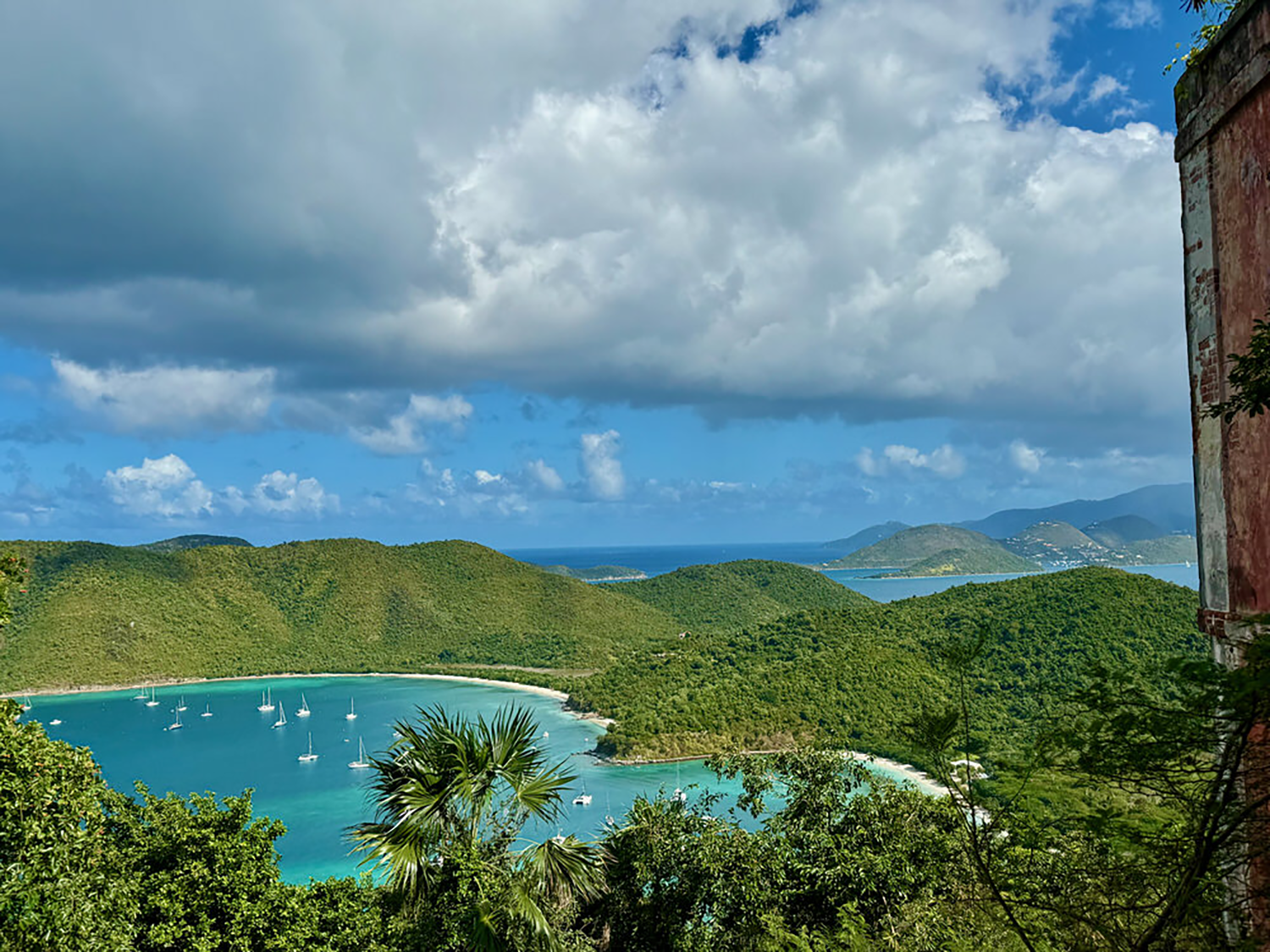
A typical June afternoon on St. John — calm water, near-empty sand, green hills.
Travel Insurance for USVI Trips During Hurricane Season
If you are traveling to the USVI between August and October, travel insurance is a practical necessity rather than an optional add-on. This is true of any Caribbean destination during those months, and it is worth being direct about rather than treating as a footnote.
Policies that cover weather-related trip interruption or cancellation become relevant when a named storm threatens your destination. The critical detail: coverage typically only applies when purchased before the storm is named. Once a storm is identified and designated, it becomes a “known event,” and many policies exclude it. This means buying insurance at the time of booking, not after a storm appears on the forecast.
Travel insurance for Caribbean trips typically costs 3 to 8 percent of the total trip cost. For a villa stay of any meaningful length, this is a small number relative to the protection it provides during the peak risk months.
What to look for in a policy: trip cancellation coverage for weather events, trip interruption coverage if you need to leave early, and “cancel for any reason” riders if you want maximum flexibility. Reading the policy language around named storms before purchasing is worth the ten minutes it takes. For details on the logistical side of USVI travel, including ferry schedules that may be affected by weather, see our guide on how to get to St. John.
Month-by-Month Conditions During USVI Hurricane Season
June and early July. Lower risk, lower prices, lighter crowds, warm and occasionally rainy. The strongest shoulder-season option for visitors comfortable with humidity and willing to shift beach days around afternoon showers. Travel insurance is sensible but less urgent.
August through September. Peak risk, peak humidity, lightest crowds of the year, often the lowest prices. The North Shore beaches in August at 7 a.m. can be entirely empty. The tradeoff is real: these months carry the most historical storm activity, the least predictability, and the most need for flexible travel arrangements. Travel insurance is essential. Flexible booking policies matter. Being prepared to cut a trip short if a storm develops is part of the planning.
October. Transitional. Risk falls meaningfully from September but is not gone. Weather often becomes more settled. A reasonable option for travelers who want lower-season prices and fewer crowds without the peak August-September uncertainty. Travel insurance still advised.
November. The tail end of the official season. Risk is low, weather is improving, and the high season has not yet arrived. Some visitors find this the quiet window: settled weather, moderate prices, and the island beginning to come alive for winter without full peak-season crowds.
How Indo House Handles the Season
Indo House remains available for bookings throughout the year. The rates calendar reflects seasonal pricing, with lower rates during the summer and shoulder months that correspond to the hurricane season window.
For guests booking during August or September, we are transparent about the tradeoffs and encourage reviewing cancellation and rebooking policies alongside any St. John villa rentals booking. Travel insurance is consistently worth the cost during those months. For guests booking in June, early July, or October and November, the calculus is more straightforward — the off-season pricing reflects genuine value without the same weather uncertainty.
The 2017 hurricanes were severe and left a lasting mark on St. John. The island has rebuilt substantially in the years since. What they demonstrated is not that St. John is particularly dangerous to visit, but that when a major storm does come, the island takes it seriously and has learned from the experience. Infrastructure and the community are more prepared than they were. The island’s character remains intact: its quiet, its landscape, its pace.
Has St. John been hit by a hurricane recently? The last major direct impact was Hurricane Irma in September 2017, a Category 5 storm that caused significant damage across the island. Hurricane Maria followed two weeks later. Before 2017, the previous major hurricane to affect the USVI directly was Hurricane Hugo in 1989. Direct hits are statistically infrequent, but they are severe when they occur.
Is it safe to visit St. Thomas during hurricane season? For most of the season — June, July, late October, November — the weather risk is low and the conditions are pleasant. August and September carry meaningful risk, but “unsafe” overstates it. The practical question is whether you are comfortable with the small probability of disruption and have travel insurance in place. Most visitors during those months experience no weather issues at all.
What happens if a hurricane is forecast during my trip? Resorts, villa managers, and airlines monitor tropical weather closely. If a storm threatens, you will typically receive advance notice and options to adjust. Flights may be canceled or rescheduled. Ferry service between St. Thomas and St. John will suspend operations ahead of any significant storm. Having travel insurance that covers weather-related changes is the single most important preparation.
Are there things to do on St. John during hurricane season? Everything the island offers in high season is available during hurricane season — beaches, hiking, snorkeling, dining in Cruz Bay, boat charters. The difference is fewer people.
Frequently Asked Questions
When is hurricane season in the U.S. Virgin Islands?
The official Atlantic hurricane season runs from June 1 through November 30. In practice, the most active period for the USVI is August through October, when warm ocean temperatures and favorable atmospheric conditions are most likely to support storm development and track storms through the northeastern Caribbean. September is statistically the peak month. June and July are part of the season but carry considerably lower risk.
Is it safe to travel to St. John during hurricane season?
Travel during hurricane season carries weather uncertainty rather than predictable danger. Most hurricane season trips to St. John proceed without any weather disruption. The risk is that a named storm could develop and track toward the USVI, forcing flight cancellations, property closures, or evacuation advisories. Travelers who book during this window should hold refundable travel arrangements or purchase comprehensive travel insurance — the risk is real but manageable with proper planning.
How much do prices drop during hurricane season on St. John?
Low season rates — roughly mid-April through mid-December, with the deepest discounts in August through October — typically run 20 to 40 percent below peak season pricing. Villa rentals, car rentals, and some restaurants all reflect this seasonal adjustment. For travelers with flexible schedules and appropriate insurance, the combination of lower rates and lighter crowds is a meaningful draw.
Should I buy travel insurance for a USVI trip during hurricane season?
Yes. Travel insurance is strongly advisable for any trip booked during hurricane season, and particularly for trips in August, September, and October. Look for a policy that covers trip cancellation and interruption due to named storms, emergency evacuation, and travel delay. Review the coverage terms carefully — some policies exclude pre-existing storm systems known at the time of purchase.
Related reading
More from the Journal
Thoughtful guides and perspectives from St. John, written to help you plan with clarity and arrive more at ease.
First time visiting St. John? Here's what actually catches visitors off guard — ferries, driving, national park rules, and what to know before you arrive.