Cinnamon Bay is the north shore beach for visitors who want more than a swim. It combines one of the longest beaches in Virgin Islands National Park with St. John's only beachfront campground and a short trail through plantation ruins behind the sand. If you're deciding between Cinnamon Bay Beach, St. John and the island's better-known coves, that mix is what matters.
It also means Cinnamon Bay feels different from nearby beaches. The main stretch is broad rather than tucked into a small cove. The campground brings more activity, more facilities, and more people near the central access points. If you want a quieter stop with less going on around you, other north shore beaches do that better. If you want one place that can carry a half-day on its own, Cinnamon Bay has a stronger case.
Cinnamon Bay Beach on St. John with the offshore cay and north shore coastline
The first useful distinction is scale. Cinnamon Bay is longer than Hawksnest and feels less contained than Trunk Bay. NPS lists it as one of the longest beaches in the park, with parking, restrooms, wheelchair access, and direct beach access. That changes the rhythm of a visit. You are not arriving at a tight postcard cove, staying for an hour, and leaving. Cinnamon gives you room to spread out, walk, and stay longer without the beach feeling immediately used up.
Location matters too. NPS places Cinnamon Bay about 4.3 miles from the visitor center on North Shore Road, east of Cruz Bay and between Trunk Bay and Maho. For guests already comparing beaches across the island, that positioning is useful: Cinnamon sits in the middle of the island's most visited beach run, but it offers a different reason to stop than Trunk Bay. Trunk Bay is the polished headline beach. Cinnamon is the north shore beach with more range.
That range is the real draw. You can swim, have lunch, walk the ruins, and still have enough beach left for a second hour on the sand. Few beaches on St. John offer that much variety without asking you to drive somewhere else for the next part of the day.
Cinnamon Bay Campground: What the Stay Is Actually Like
The campground is what separates Cinnamon from every other St. John beach. As of April 2026, the operator site lists three accommodation types: eco-tents, cottages, and bare sites. The eco-tents are furnished canvas structures with a queen bed, one outlet, outdoor picnic setup, and shared bathhouses. The cottages add a small refrigerator and extra sleeping space, but they still use shared restrooms and showers. Bare sites are the most stripped-back option.
Eco-tents at Cinnamon Bay Campground set back from the beach under the trees
What actually matters here is not the romance of "camping on the beach." It is the comfort threshold. This is not a resort in disguise. There is no air conditioning in these units, no private bathroom, and no buffer from humidity, insects, or the sound of neighboring campers moving around after dark. For some travelers that is the point. For others, it is the reason to book a villa and visit Cinnamon Bay for the day instead.
Cinnamon Bay cottage balcony looking across the sand and water
The upside is that the beach infrastructure is better than most St. John beach days. The campground store carries cold drinks, groceries, charcoal, reef-safe sunscreen, and basic supplies. Rain Tree Cafe serves both campers and visitors, with breakfast from 7:30 to 9:30, dinner from 5:30 to 8:00, and a food truck from 11:00 to 4:00, according to the operator's current dining page. If you are arriving after a ferry day and still learning how to get to St. John, having food, bathrooms, and beach access in one place reduces friction.
For an overnight stay, though, the tradeoff is straightforward. Cinnamon gives you beachfront access at a lower service level. It does not give you privacy, air-conditioned downtime, or the sense of retreat that comes with a house set apart from the public beach.
Cinnamon Bay's History on Foot
The historical layer is why Cinnamon Bay deserves more than a quick towel stop. NPS describes the Cinnamon Bay Nature Loop as a 0.5-mile accessible trail through a former sugar plantation site. The walk is short enough to add without turning your beach day into a hiking day, which is exactly why it works.
Stone plantation ruins along the Cinnamon Bay nature loop trail
This is also where the beach starts to feel specific to St. John rather than interchangeable with any Caribbean shoreline. The plantation ruins sit directly behind the modern campground, so the shift from beach to history happens fast. You move from sand and sea grape to stone walls and old industrial remains in a matter of minutes. That contrast tells you more about the island than another hour on the beach would.
The key distinction is scale. If your priority is the most substantial plantation site on St. John, Annaberg is the deeper historical stop. Cinnamon's advantage is proximity. You can absorb the site in a short loop, return to the water, and keep the day moving. For many visitors, that makes the history more likely to happen at all.
Swimming, Snorkeling, and On-Site Facilities
For beach time alone, Cinnamon is a strong swimmer's beach. NPS describes it as a long, gently sloping shoreline, and that tracks with the experience most visitors have at the center of the bay. Entry is gradual, the beach is broad, and the longer shoreline gives groups space to spread out more easily than they can at narrower coves.
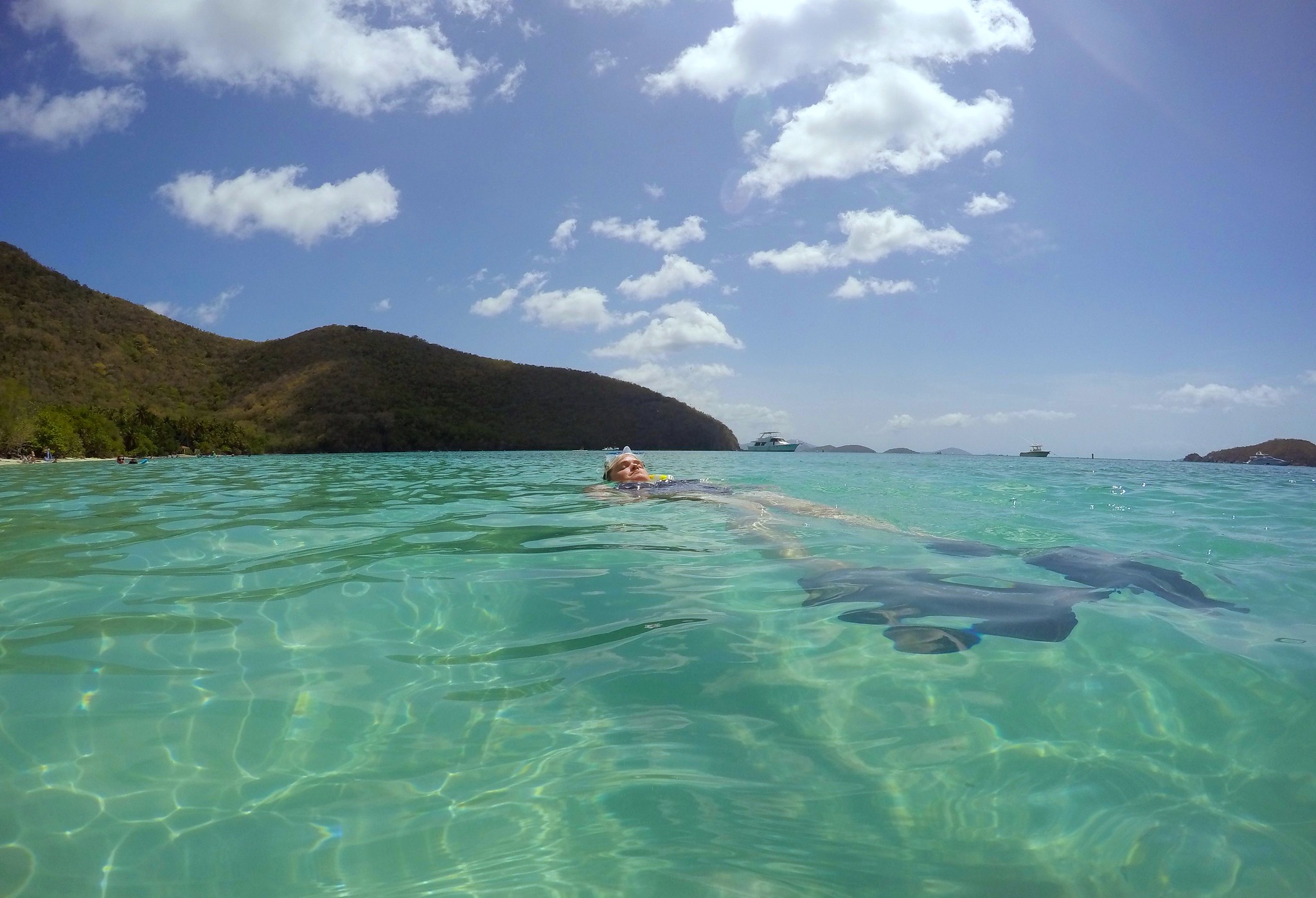
Snorkeling is where expectations need calibration. Cinnamon can reward casual snorkeling, especially if you are already in the water and want to explore the edges of the bay, but it is not the place to choose solely for reef structure. If snorkeling is the main event, Maho Bay Beach or Trunk Bay usually give clearer reasons to prioritize them. Cinnamon works better as a full beach stop where snorkeling is one part of the day, not the whole point.
Snorkelers in the shallow water at Cinnamon Bay Beach on St. John
The facilities change the equation. Current NPS and operator information confirms on-site restrooms, parking, food service, and a store tied to the campground. That makes Cinnamon easier for families, mixed-interest groups, and anyone who wants to stay through lunch without packing their entire day into a cooler. It also means the central section of the beach feels busier and less quiet than the more stripped-back beaches west of it.
When Cinnamon Bay Makes Sense
Cinnamon is the right choice when you want one north shore stop to do several jobs at once. Beach, lunch, a short historical walk, and enough room for different people in the group to want different things. It is also a useful answer for travelers who do not want to pay Trunk Bay's entrance fee but still want facilities and structure around the day.
It makes less sense if quiet is your top priority. Hawksnest asks less of you logistically and usually feels calmer. If sea turtles are the main objective, Maho is the stronger bet. If you are staying in Great Cruz Bay and simply want the shortest possible beach stop before returning home, Cinnamon is not that beach. It is a more deliberate outing.
That is why it works well in a broader island plan. Go to Cinnamon when you want the beach day to have a little shape to it. Keep it off the list when what you want is a fast swim and a quick drive back. Both versions of a St. John day are valid, and choosing between them is more useful than calling every beach "worth it."
What This Means for Indo House Guests
For Indo House guests, Cinnamon Bay usually works as a half-day north shore outing rather than an improvised drop-in. It gives you enough to justify leaving the south shore for the morning or early afternoon, then returning to The Villa for a quieter second half of the day. That contrast is part of the appeal.
Indo House is set up for privacy, indoor-outdoor living, shoreline access, and the slower rhythm of Great Cruz Bay. Cinnamon Bay is more public, more active, and more layered. Used well, the two experiences complement each other. Cinnamon gives you beach infrastructure and a historical stop in one place. Indo House gives you the part of the day that does not need anyone else's schedule.
If you are building out a longer itinerary, keep Cinnamon Bay in the wider mix of beaches, hikes, and day trips rather than treating it as an automatic priority. That context matters because Cinnamon is not the island's single answer for every kind of visitor. It is most useful for visitors who want their north shore stop to do more than one thing well.
Frequently Asked Questions
Is there camping at Cinnamon Bay Beach?
Cinnamon Bay has historically been home to one of the Caribbean's only national park campgrounds, offering tent sites, eco-tents, and bare sites directly on the beach. The campground closed following the 2017 hurricanes and has undergone changes in management and reopening status since then. Confirm current availability and booking options directly with the Cinnamon Bay Campground or the National Park Service before planning a stay, as the situation has continued to evolve.
Does Cinnamon Bay Beach have facilities?
Cinnamon Bay has more developed facilities than most St. John beaches, including restrooms, changing areas, and food service in and around the campground. The beach also has a historical context that supports a visitor center presence nearby. Facilities availability depends partly on the campground's operational status — during closures or transition periods, some services may be reduced. Check current conditions before your visit.
Is Cinnamon Bay good for snorkeling?
Cinnamon Bay offers accessible snorkeling from shore, particularly along the rocky points at the edges of the bay. The bay's wider, sandy beach section is better suited for swimming and wading than for reef exploration. Snorkelers who want the best marine life concentration on the North Shore typically prefer Maho Bay or Hawksnest. That said, Cinnamon Bay is a pleasant spot for a casual snorkel, especially for less experienced swimmers who benefit from the calmer central area.
What is the historical significance of Cinnamon Bay?
Cinnamon Bay holds layered history. Pre-Columbian Taino and Arawak peoples occupied the site for thousands of years before European contact, and archaeological evidence of their presence has been found in the area. During the colonial era, the bay and surrounding land were part of a sugar plantation operation. The ruins of the plantation era, including stone structures and mill remnants, are visible along the trails near the beach. The Cinnamon Bay Loop Trail connects many of these sites with interpretive markers.
Related reading
More from the Journal
Thoughtful guides and perspectives from St. John, written to help you plan with clarity and arrive more at ease.
Virgin Islands National Park covers more than half of St. John. Which beaches and ruins to prioritize, what it costs, and how to plan a day from Cruz Bay.
Maho Bay Beach on St. John is a year-round sea turtle habitat. Green and hawksbill turtles feed in the seagrass shallows, often visible from the shoreline.