Trunk Bay sits on St. John's north shore, roughly three miles east of Cruz Bay, and for most visitors it's the first beach they make time for. The crescent of pale sand, the clear water, and the forested hills rising behind the bay look much as they do in photographs.
What photographs don't convey is the 225-yard underwater snorkeling trail maintained by the National Park Service along the bay's western edge — marked stations identify coral formations and fish species as you swim, making it genuinely useful for first-time snorkelers. For anyone visiting Trunk Bay on St. John, timing and a bit of planning make a meaningful difference.
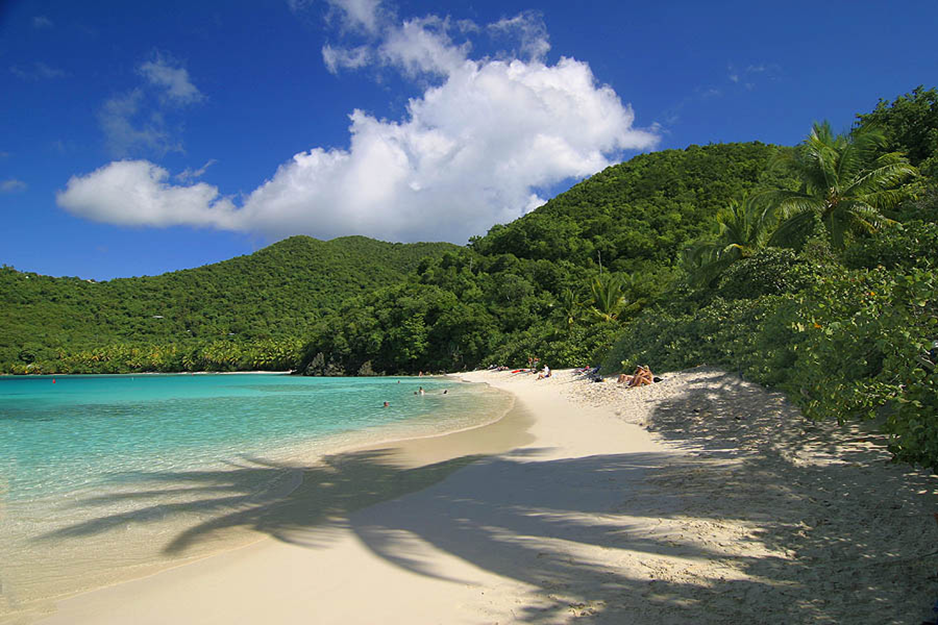
Elevated view of Trunk Bay beach crescent, St. John USVI, showing turquoise water and forested hills
Trunk Bay sits within Virgin Islands National Park, which protects roughly 60 percent of St. John's land and nearly all of its north shore coastline. That designation is part of what makes the beach worth visiting: it limits development, keeps the surrounding hills forested, and maintains a standard for the shoreline that private ownership rarely sustains. The park service manages access, maintains the facilities, and oversees the underwater snorkeling trail that runs along the bay's western edge.
The Shape and the Water
The bay itself is shaped like a gentle crescent, roughly a quarter mile of pale sand backed by sea grape trees and low palms. The water moves from near-transparent turquoise at the shore to deeper blue toward the reef offshore. On calm days, which describes most of the year between November and June, you can see the seafloor in ten feet of water without effort.
The name is thought to derive from the small islets visible just offshore, which early navigators described as trunk-shaped. Whatever the origin, the bay is unmistakable from the road above: the descent from the North Shore Road offers a view of the full crescent that stops most visitors before they've reached the parking area.
The Underwater Snorkeling Trail
The feature that separates Trunk Bay from other well-known beaches on St. John is a 225-yard underwater snorkeling trail maintained by the National Park Service. Marked stations along the route identify coral formations, fish species, and reef features with underwater plaques. The entry point is on the western end of the beach, clearly marked from shore.
The 225-yard underwater trail is marked with NPS plaques identifying coral and fish species.
The Marked Route
The trail is well-suited to beginners. The water is shallow, the markers are easy to follow, and the route covers enough reef to give first-time snorkelers a solid introduction to Caribbean reef life. You'll typically see parrotfish, sergeant majors, blue tang, and the occasional spotted eagle ray in the deeper sections at the trail's outer reach. Brain coral and sea fans are visible along most of the marked route, and the plaques help identify what you're looking at in a way that makes the experience educational rather than just scenic.
The reef along the trail has seen heavy visitor traffic over the years, but the park's management has helped maintain its health relative to unprotected reef systems elsewhere in the region. You'll notice the difference compared to reefs that lack NPS oversight.
Coral reef and fish along the snorkeling trail at Trunk Bay — parrotfish, blue tang, and sergeant majors are common sightings.
Beyond the Trail
Experienced snorkelers often find the marked trail itself brief, but the broader reef around the bay rewards time beyond the designated route. The rocks near the western point and the deeper water off the reef's outer edge tend to have more fish activity and better coral coverage. In the early morning, before the snorkeling trail gets busy, the outer reef sections are often where you'll see larger species: barracuda holding still in the current, schools of blue tang moving across the reef face, and occasionally a hawksbill turtle grazing on sponges in the shallows. For a broader sense of what snorkeling on St. John offers across the island, we've covered the other top sites in detail.
What to Bring for Snorkeling
Snorkel equipment rental is available at the beach through the park concession. Bringing your own gear is worthwhile — not primarily to save money, but because a well-fitting mask makes the difference between a comfortable hour underwater and a frustrating one. Fins are optional for the shallow portions of the trail but useful if you plan to explore beyond the marked route. An anti-fog solution for your mask is worth the small investment; the tropical humidity fogs rental masks quickly if they haven't been recently treated.
Facilities and Entrance Fee
Trunk Bay is managed by the National Park Service and charges an entrance fee of $5 per person for adults sixteen and over (as of April 2026). Children fifteen and under enter free. The fee covers access to the beach and its facilities, and it's collected at the entrance gate before you reach the sand.
The beach facilities are open daily from 8:00 a.m. to 4:00 p.m. Hours have been adjusted periodically following hurricane seasons, so it's worth confirming current hours before planning your morning around an early arrival.
What You'll Find On-Site
The on-site facilities are among the most complete of any beach on St. John. You'll find restrooms, outdoor showers, a snack bar, a small gift shop, and lockers available for rent. The snack bar serves cold drinks, basic sandwiches, and a few hot items. It's fine for a midday break but not a destination in itself. The parking area is paved and relatively large by island standards, though it fills quickly on busy mornings. A separate parking fee applies.
When to Visit
Timing matters at Trunk Bay more than at most St. John beaches. The beach draws its heaviest traffic when cruise ships are docked in St. Thomas, which typically means weekday mornings from late October through April. When multiple large ships are in port and passengers take the ferry or an organized day trip to St. John, Trunk Bay is a standard excursion stop. On those mornings, the parking area fills before 10 a.m. and the snorkeling trail becomes crowded enough to feel less than peaceful.
Trunk Bay is quietest in the early morning, before the cruise ship excursions arrive.
Early Morning Advantage
We've found that arriving as close to the 8 a.m. opening as possible gives a substantially different experience. The morning light is better for both snorkeling and photography, with the sun behind you rather than overhead. The water is typically calmer, the sand still smooth, and the snorkeling trail is yours for the first thirty to forty-five minutes. Late afternoons on quieter days are another option. The crowds thin noticeably after 2 p.m., though the snack bar may close early and the facilities wind down toward 4 p.m.
Shoulder Season and Cruise Ship Schedules
For the least crowded conditions overall, shoulder season offers the strongest combination of weather and manageable visitor numbers. May through early July and again in October tend to have lighter crowds than the peak winter months. A cruise ship schedule is publicly available through the St. Thomas–St. John Port Authority, and checking it before choosing your day is genuinely useful. The difference between a calm Tuesday morning and a morning with three large ships in port is not subtle. We check the schedule ourselves before recommending a Trunk Bay day to our guests.
Getting There
Trunk Bay is located on the North Shore Road (Route 20), roughly three miles east of Cruz Bay. The drive from the center of town takes about ten minutes, though the road climbs steeply through the hills before descending to the bay. The route is paved and navigable in a standard rental car. Those unfamiliar with narrow, winding mountain roads should take their time on the descent.
Driving and Parking
There is no public bus service to Trunk Bay. Open-air safari taxis operate regularly on St. John and will drop passengers at the beach; arranging a taxi or private transfer is the most practical option if you're not renting a car. From our location in Great Cruz Bay, the drive to Trunk Bay runs about fifteen minutes, passing through the hills above Cruz Bay before dropping toward the water.
On busy days, parking strategy matters. The main lot fills by mid-morning, and there is limited overflow space along the road. Arriving by 8:30 a.m. virtually guarantees a spot. After 10 a.m. on cruise ship days, you may circle or wait for someone to leave. The full north shore has more to offer than Trunk Bay alone, and combining it with nearby beaches makes for an easy half-day from most of the island. For a full picture of what else the island offers, our guide to things to do on St. John covers the range of options.
What to Bring
Sun Protection
Reef-safe sunscreen is required within the national park. The park service requests visitors use mineral-based formulations, specifically zinc oxide or titanium dioxide, to protect coral health. Standard chemical sunscreens are not permitted at the beach. This is enforced unevenly, but arriving with the right product means you won't have to make a decision about it at the gate. We keep reef-safe sunscreen recommendations available for guests who want to purchase before arriving on island.
Gear and Provisions
Water shoes are not essential for the beach itself but are useful if you plan to explore the rocky sections of reef beyond the snorkeling trail's main route. The seafloor in those areas has more sea urchins than the cleared sandy approach to the trail. A dry bag is worth having to protect phones and cameras during the snorkeling portion. The snack bar sells cold drinks and light food, but bringing a cooler means you're not dependent on it, particularly later in the afternoon when selection thins out.
Beaches Worth Pairing with Trunk Bay
The north shore road offers several beaches within a short drive, and a morning at Trunk Bay pairs naturally with a quieter afternoon elsewhere.
Hawksnest and Cinnamon Bay
Hawksnest Beach, a few minutes west toward Cruz Bay, is smaller and less developed. There is no entrance fee, crowds are lighter on most days, and the snorkeling along its rocky edges is consistent. It's a reliable option when you want to follow a busy morning at Trunk Bay with somewhere more peaceful.
Hawksnest sits a few minutes west of Trunk Bay and draws considerably fewer visitors.
Cinnamon Bay, a few minutes east of Trunk Bay, has its own history as the site of a former resort and an ongoing archaeological excavation. The beach is longer and more exposed, with a different character than the sheltered crescent at Trunk Bay.
Maho Bay and Beyond
Maho Bay Beach, further east still, is known for the sea turtles that come to feed in its shallows. Many guests describe a morning at Maho as one of the more unexpected highlights of their time on St. John. The turtles are most reliably visible in the late morning when the seagrass beds are calm.
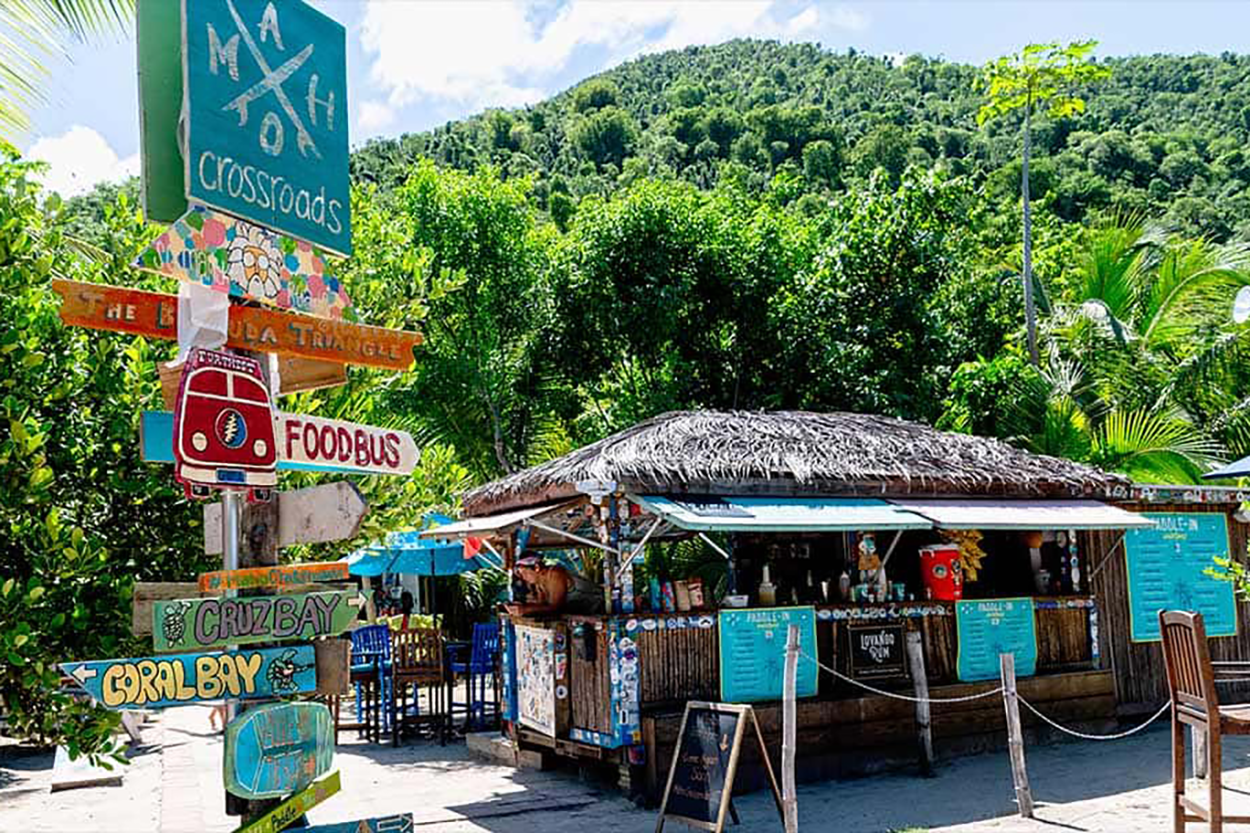
The Maho Crossroads food bus — a casual stop between north shore beaches.
For a complete overview of the island's beaches, including south shore options that see fewer visitors, our guide to the best beaches on St. John covers each one with honest notes on what to expect.
An Honest Assessment
Trunk Bay earns its reputation. The horseshoe of pale sand, the reef visible from shore, the forested hills framing the bay. The snorkeling trail makes it accessible for guests who haven't snorkeled before. The facilities are well-maintained. For many visitors, it remains the single most memorable beach of their trip.
That said, it is also the busiest beach on the island, and on cruise ship days in high season, that fact is noticeable. The experience on a quiet Tuesday morning in October and on a crowded Friday morning in February are not the same beach. If solitude is your priority on a given day, there are stronger options nearby.
Trunk Bay belongs on your itinerary. It also rewards a little planning. Going early, checking the cruise ship schedule, and knowing which nearby beaches offer quiet when you want it turns a good visit into a genuinely relaxed one. Guests staying at Indo House are well-positioned to do all of this. The beach is a short drive from Great Cruz Bay, and we're glad to help with timing, logistics, or planning the rest of your time on the island. You can view our rates and availability to begin planning.
Frequently Asked Questions
Is there an entrance fee at Trunk Bay?
Yes. As of 2025, Trunk Bay charges an entrance fee of $5 per person for visitors 17 and older. The fee is collected at the entrance kiosk. National Park Annual Passes — including the America the Beautiful Pass — cover the fee for the cardholder and up to three additional adults. Children 16 and under enter free.
What time does Trunk Bay open?
Trunk Bay typically opens at 8:00 a.m. and closes at 4:00 p.m. Hours can vary seasonally, and the beach may close early or temporarily when the National Park Service conducts maintenance or other activities. Arriving close to opening is one of the better strategies for beating the mid-morning crowd, particularly on days when cruise ships are in St. Thomas. Confirm current hours at nps.gov/viis before visiting.
How crowded does Trunk Bay get?
Trunk Bay is St. John's most visited beach and can become genuinely crowded during peak season, particularly between 10 a.m. and 2 p.m. when tour groups from St. Thomas and day-trippers arrive. Cruise ship days in St. Thomas amplify this significantly. Arriving before 9 a.m., visiting in low season, or going late in the afternoon as day-trippers head back reduces the crowds considerably.
Is the snorkeling trail at Trunk Bay worth doing?
For first-time snorkelers or those who want a structured introduction to Caribbean reef life, yes. The marked trail runs approximately 225 meters along the bay's eastern shoreline, with numbered markers identifying fish and coral species. It is not the most diverse reef on the island — experienced snorkelers often prefer Maho Bay for sea turtles or Hawksnest for denser marine life — but it is accessible, well-maintained, and provides a reliable experience without requiring navigation skills.
Related reading
More from the Journal
Thoughtful guides and perspectives from St. John, written to help you plan with clarity and arrive more at ease.
A practical guide to hiking the Reef Bay Trail — petroglyphs, sugar mill ruins, the guided hike program, and what to know about parking and the return climb.