Snorkeling on St. John: Where to Go and What You'll See
Most of the Caribbean's best-known snorkeling has been thinned out by development, anchoring, and sunscreen runoff. St. John is different. About 60 percent of the island — and most of its coastline — falls within Virgin Islands National Park, which means the reefs have been protected since 1956. That protection shows in the water.
St. John snorkeling ranges from shallow, calm bays where sea turtles graze in sea grass to exposed reef structures where nurse sharks rest under ledges and elkhorn coral rises from 8 feet of water. What you see depends on where you go and how you get there. This guide covers the six best spots, how to reach them from Great Cruz Bay, and what to know before you go.
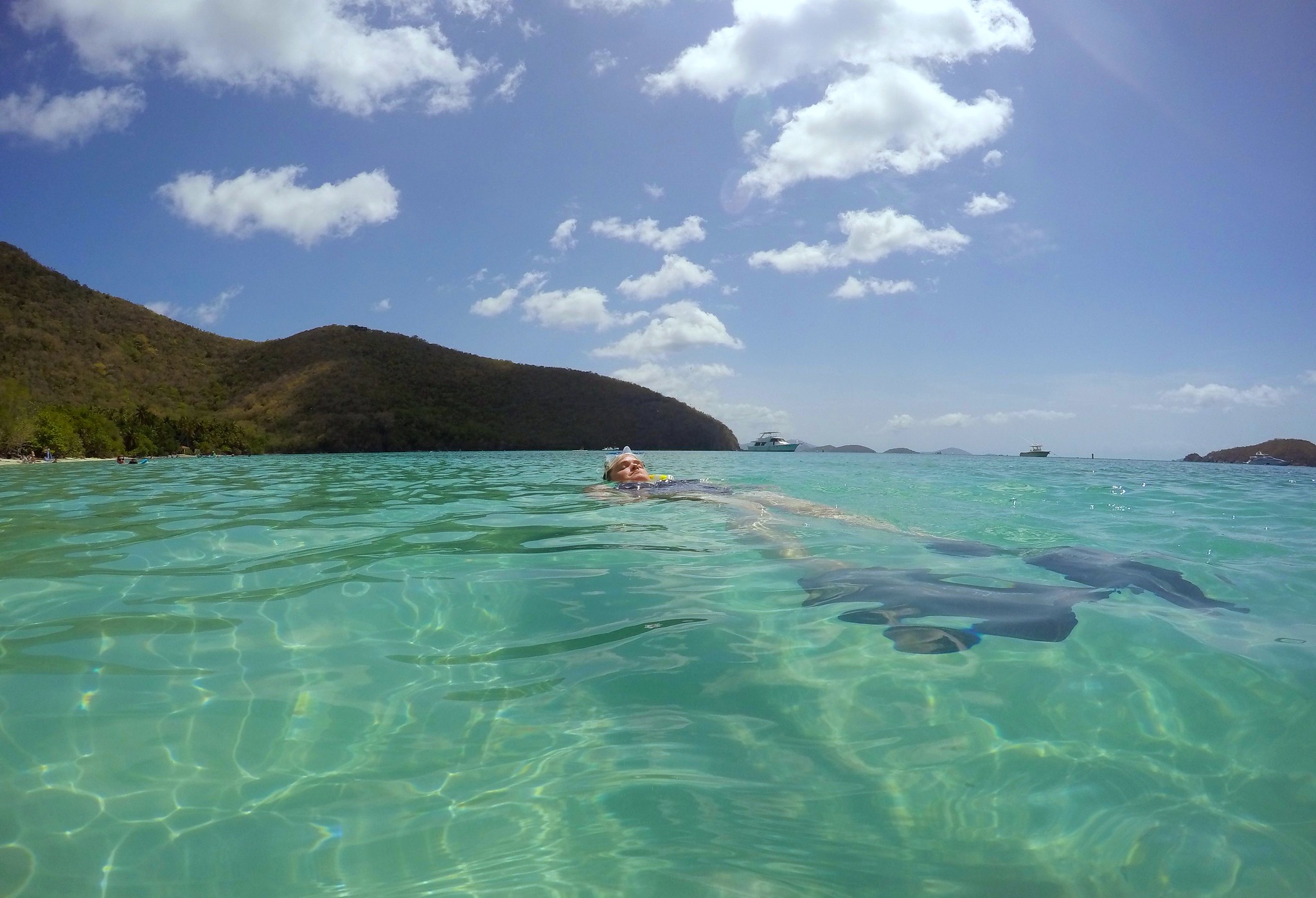
Snorkeler swimming above coral reef with sea turtle in clear water, St. John, USVI
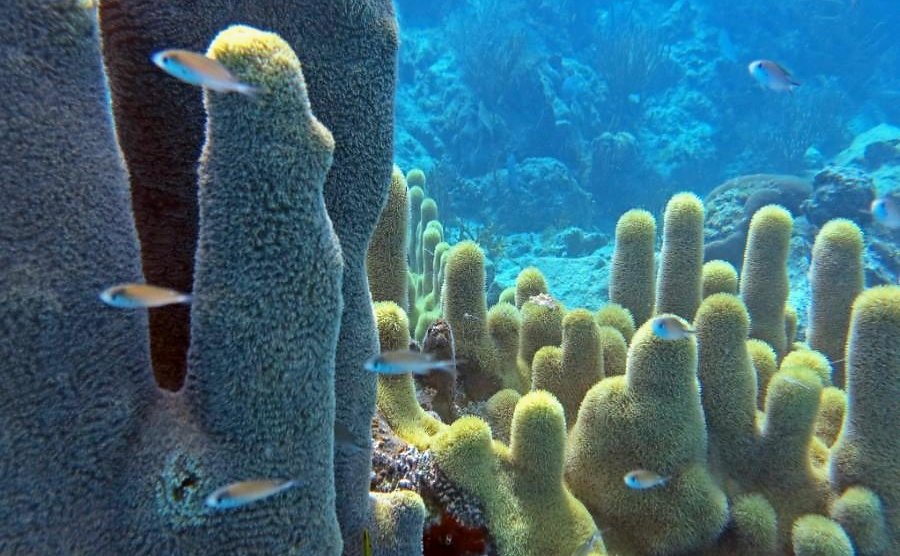
The reefs around St. John support a wide range of Caribbean marine life. Surgeonfish, French grunts, sergeant majors, parrotfish, and bar jacks are common at almost every site. In sea grass beds — most notably at Maho Bay — green sea turtles feed year-round. Nurse sharks rest under ledges at Waterlemon Cay and a few other deeper spots. Spotted eagle rays and southern stingrays pass through occasionally. At sites with healthy hard coral — particularly Haulover Bay and Waterlemon Cay — you'll find brain coral, elkhorn, pillar coral, and gorgonians like sea fans and sea plumes.
The reefs are not uniform. Hurricane Maria in 2017 damaged sections of coral across the island, and some areas are still recovering. The snorkeling is still excellent by most standards — but expect variation between sites.
Pillar coral at a St. John north shore reef, among the finest still standing.
Waterlemon Cay: The Full Snorkeling Experience
Waterlemon Cay is consistently cited as the best shore snorkeling on St. John. Getting there takes effort: you park at the Annaberg Plantation ruins on the north shore, then hike roughly 20 minutes along the Leinster Bay Trail — a flat, shaded path with good footing — to reach the beach. From there, it's a short swim across the channel to the cay itself, roughly 0.1 to 0.2 miles depending on where you enter.
Leinster Bay from above — Waterlemon Cay at the far end, reached by trail.
The snorkeling around the cay rewards the effort. In the sea grass beds between shore and cay, you'll typically find green sea turtles, conch, and cushion starfish. Closer to the cay, the reef holds brain coral, purple sea fans, French angelfish, and in the deeper ledges, resting nurse sharks. Squid are common in the shallower water on calmer days.
The tradeoff: there is often a strong current on the western side of the cay, particularly around full and new moons. Beginners should stay on the protected eastern side and avoid pushing past the point. Check conditions before you go, and don't snorkel alone here.
From Indo House in Great Cruz Bay, the drive to the Annaberg parking area takes approximately 20–25 minutes via North Shore Road.
Maho Bay: Calm Water and Sea Turtles
Maho Bay is the easiest entry point for reliable turtle encounters on St. John. The beach sits on the north shore, about 15 minutes from Great Cruz Bay, and the snorkeling begins immediately off the sand in 3–6 feet of calm, clear water. Because Maho Bay faces south and is sheltered by the surrounding hillsides, it stays calmer than other north shore beaches in most conditions.
The sea grass beds directly off the beach are active feeding grounds. Green sea turtles are present most mornings and afternoons — often multiple at a time. Hawksbill turtles are sighted occasionally. Fish life is good but unremarkable compared to sites with more coral structure.
Green sea turtle grazing in the sea grass beds off Maho Bay.
Maho has no amenities. No bathrooms, no gear rental, no shade structures. Parking spaces along the road fill by mid-morning on weekends, earlier in high season. Arrive before 9am to get a spot without circling.
For a deeper look at what Maho Bay offers above and below the water, our full Maho Bay Beach guide covers it in detail.
Trunk Bay's Underwater Snorkel Trail
Trunk Bay is the most organized snorkeling experience on St. John. The National Park Service maintains a 225-yard marked underwater trail off Trunk Cay — a small island just offshore — with plaques at each station identifying coral species and marine life. The trail sits in 8–15 feet of water on the protected side of the cay and is patrolled by a lifeguard during operating hours (8am to 4pm).
The entrance fee is $5 per person for visitors 16 and older [VERIFY: may change]. Trunk Bay has the most complete facility setup of any beach on the north shore: bathrooms, showers, a snack bar, snorkel gear rentals, and beach chair rentals.
The honest caveat: Trunk Bay is the most visited beach on St. John, and it shows. In high season, the beach and water are crowded by 10am. The underwater trail is the best-maintained and most accessible entry point for first-time snorkelers, but experienced snorkelers will find Waterlemon Cay or Haulover Bay more rewarding. Go early or accept the company.
Trunk Bay is about 12 minutes from Indo House by car. More on parking, facilities, and what to expect on arrival is in our Trunk Bay guide.
Cinnamon Bay and the North Shore
Cinnamon Bay sits roughly four miles east of Cruz Bay on the North Shore Road. The snorkeling focuses on the small cay off the beach — a short swim from shore — and the rocky outcroppings on either side of the bay. You'll find reef fish, some coral growth on the rocks, and occasionally a lemon shark moving along the sandy bottom. The National Park Service facilities include bathrooms, a small store, and kayak rentals.
The snorkeling at Cinnamon Bay is better than its reputation suggests, partly because Trunk Bay absorbs most of the attention. Worth a morning, especially if you're combining snorkeling with a beach day and don't want the crowds.
The current can pick up around the eastern and western points of the bay. Stay inside the cay and don't push past the rocks into open water.
Haulover Bay: Highest Coral Density on St. John
Haulover Bay North sits on the far east end of St. John, about 30 minutes from Cruz Bay. It sees a fraction of the traffic of the north shore beaches. The snorkeling along the western wall of the bay is exceptional — elkhorn coral, fire coral, brain coral, and sea fans cover the underwater structure from 5 to 20 feet. Some of the coral heads here are among the healthiest on the island.
This is not a beginner site. Haulover Bay is exposed to ocean swell on certain days, and the current past the western point can be strong. The bottom transitions quickly from shallow rock to deep open water. Verify that conditions are calm before entering, and don't go alone.
No facilities. The parking area is small — just a few spaces near the beach access path. The effort and distance keep the crowds away, which is most of what makes it worth the drive.
Boat Snorkeling on St. John
Several of the best snorkeling sites around St. John are more accessible — or only reachable — by boat. Henley Cay, just off the western tip of the island, has no beach access and is widely considered among the finest snorkeling in the area. Hurricane Hole on the east end offers mangrove snorkeling — a different environment where juvenile fish shelter among the roots. Carvel Rock (Congo Cay) has dramatic underwater structure and schooling fish.
Boat charters operating out of the National Park Dock in Cruz Bay can reach these sites as well as spots across the channel in the British Virgin Islands. Norman Island's sea caves and The Indians — a cluster of rocky outcroppings with some of the most intact reef in the region — are popular charter stops.
Most charters depart from Cruz Bay, roughly five minutes from Indo House. The concierge can arrange private charters through Xande (Indo House's boat captain) or other operators depending on your dates and group size. More on charter options is in our guide to boat tours and charters from St. John.
Gear, Sunscreen, and When to Go
Gear: Snorkel gear is available for rent in Cruz Bay from St. John Beach Bum (directly at the ferry dock), Low Key Watersports, and Virgin Islands Ecotours at Mongoose Junction Shopping Center. Trunk Bay also rents gear on-site. If you're snorkeling multiple days, a weekly rental from one of the Cruz Bay shops typically works out cheaper than daily fees.
Sunscreen: Chemical sunscreens are prohibited on St. John to protect coral reef. Mineral sunscreen (zinc oxide or titanium dioxide) is required and sold at most shops in Cruz Bay and at Trunk Bay's NPS facility.
When to go: December through April offers the calmest water and best visibility. The trade winds keep the seas relatively flat on the north shore and the underwater visibility is typically at its highest. Summer and early fall can bring afternoon chop and rain that reduces visibility. Early morning — before 9am — gives you the calmest conditions, better light, and less competition for parking at the more popular beaches.
Frequently Asked Questions
Is snorkeling on St. John good for beginners?
Yes, with site selection mattering. Maho Bay and the Trunk Bay underwater trail are well-suited to beginners — shallow entry, calm water, and marine life close to shore. Waterlemon Cay and Haulover Bay are better for confident swimmers comfortable with current and open water. The key is matching the site to your skill level rather than just heading to the most famous name.
Do you need to bring snorkeling gear to St. John?
No. Gear is available for rent in Cruz Bay from several shops near the ferry dock, and Trunk Bay has on-site rentals. A rented mask may not seal as well as one you're used to — if you snorkel regularly, bringing your own mask is worth the luggage space.
Are sea turtles common in St. John waters?
Green sea turtles are reliably found at Maho Bay year-round, feeding in sea grass beds just offshore. They're also sighted at Waterlemon Cay and occasionally at Trunk Bay and Cinnamon Bay. Early mornings tend to produce more consistent sightings before boat traffic and swimmers arrive.
What is the best snorkeling spot on St. John?
Waterlemon Cay is the most commonly cited answer for overall reef quality — healthy coral, diverse marine life, and reliable wildlife — but it requires a 20-minute hike and a swim to reach. For ease of access and consistent turtle encounters, Maho Bay is the more practical choice for most visitors. Haulover Bay North has the best hard coral density if you're willing to drive east and are comfortable in stronger current.
Can you snorkel at night on St. John?
Guided night snorkel tours operate on St. John, typically via charter. Snorkeling independently at night is not recommended — currents can be unpredictable and the beaches have no lighting. A guide with local knowledge and proper equipment makes the difference.
Snorkeling is one of the strongest reasons to spend time on the water rather than just near it on St. John. The variety of sites — from the calm, turtle-thick shallows at Maho to the reef-dense walls at Haulover — means there's a realistic option for every skill level and energy level. The difference between a good snorkel and a great one is often just knowing where to go on a given morning.
For a broader look at what's available on and around the island, the things to do on St. John guide covers water activities, hiking, dining, and more in one place. If you're exploring what a stay at Indo House looks like as a base for this kind of trip, the villa's location in Great Cruz Bay puts you within 10–25 minutes of every north shore site on this list.
Related reading
More from the Journal
Thoughtful guides and perspectives from St. John, written to help you plan with clarity and arrive more at ease.
Virgin Islands National Park covers more than half of St. John. Which beaches and ruins to prioritize, what it costs, and how to plan a day from Cruz Bay.
Maho Bay Beach on St. John is a year-round sea turtle habitat. Green and hawksbill turtles feed in the seagrass shallows, often visible from the shoreline.
Honeymoon Beach is one of St. John's quietest stretches of sand, reachable on foot from Cruz Bay or by water. Here's how to get there and what to expect.