Hawksnest Beach, St. John: The Quiet Alternative to Trunk Bay
Hawksnest Beach is the first beach you reach heading east out of Cruz Bay, and for many visitors it's also the easiest to enjoy. The crescent of pale sand sits just a few minutes from town, framed by forested hillsides and rocky points that break the shoreline into three distinct coves. It's smaller than Trunk Bay, quieter than Maho, and free to enter, which is part of why locals tend to recommend it when guests ask where to go when they only have an hour or two.
Hawksnest doesn't appear on the same photograph lists that have made some of St. John's other beaches famous. That's part of its appeal. The beach shares the same character as the rest of the north shore, but it asks less of you to get there and hands back a calmer afternoon in return. For anyone visiting Hawksnest Beach on St. John for the first time, understanding what it offers, and what it doesn't, makes the short drive worth planning.
Aerial view of Hawksnest Beach, St. John — white sand cove with turquoise water and forested hills
Hawksnest sits within Virgin Islands National Park, like most of the north shore coastline, which means it's protected from the kind of development that might otherwise cluster around a beach this close to town. The hills behind the sand remain forested. The road in is narrow and unmarked beyond a modest brown sign. There are no resorts, no beach bars, no lines of lounge chairs for rent. What you find at Hawksnest is roughly what the park service has kept here for decades: a beach, a few picnic shelters, and the water.
The comparison most visitors make is to Trunk Bay, which sits about two miles further east along the North Shore Road. Trunk Bay is the more famous beach, with the marked underwater snorkeling trail, the larger parking area, and the entrance fee. Hawksnest is the opposite of most of those things: smaller, free, closer to Cruz Bay, and without the infrastructure that draws cruise ship excursions. On a busy morning at Trunk Bay, a quiet morning at Hawksnest is often happening a few minutes down the road.
The Three Coves: Hawksnest, Gibney Beach, and Little Hawksnest
The bay breaks into three distinct sections, each with its own character. What most people call Hawksnest Beach is the main central cove — the one directly accessible from the NPS parking lot. It has the widest stretch of sand, the easiest water entry, and the picnic shelters. Sea grape trees shade the back of the beach, and the water stays shallow and calm well out from shore. On a busy Saturday this cove fills up first, and it's the one that earns the beach its reputation.
On the western side of the bay, a short walk from the parking area, is Gibney Beach — also known as Oppenheimer Beach, named for the family whose estate was donated to the national park. It's smaller and more sheltered than the main cove, with calmer water and fewer visitors even on days when the parking lot is full. Locals who know the bay well often head straight past the main cove and settle here instead.
Little Hawksnest sits on the eastern end of the bay, separated from the main cove by a rocky point that also happens to be one of the better snorkel spots in the area. The sand strip is narrower than the main beach and the water entry is uneven, but once you're in, the reef at the base of the point is dense and the fish are consistent. It's the quietest of the three and worth the short walk around the rocks.
Early morning at Hawksnest — the lot is empty and the water is at its flattest
Snorkeling at Hawksnest Beach
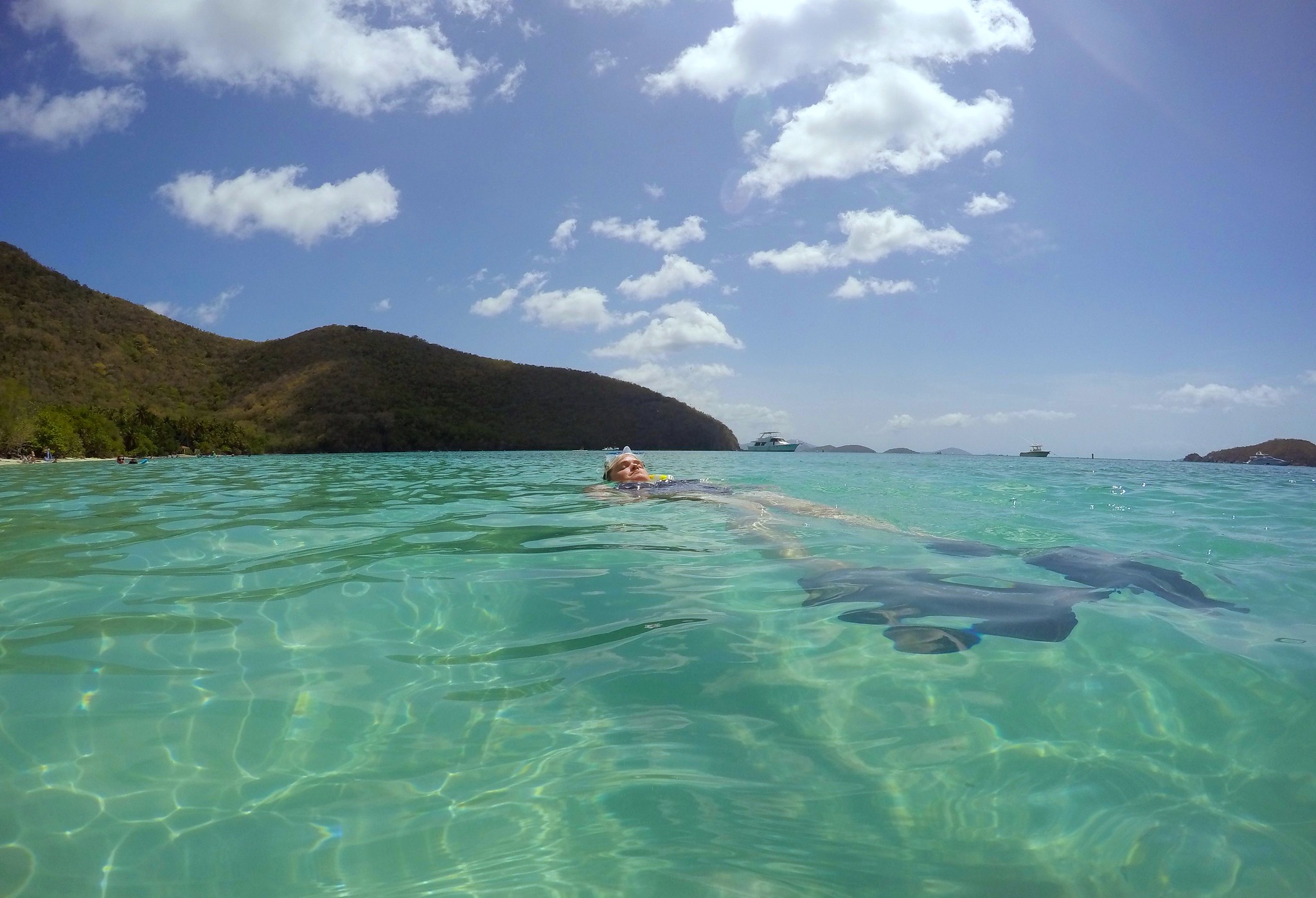
The snorkeling trail at Trunk Bay gets the attention, but some guests end up preferring what Hawksnest offers. The reef structure here sits along the rocky points at the edges of each cove, which means you can enter the water almost anywhere and be swimming over coral and fish within a minute or two. There's no marked route, no underwater plaques, and no interpretive program. It's the kind of snorkeling that rewards wandering.
Expect to see the usual cast of Caribbean reef fish: parrotfish, sergeant majors, blue tang, and yellowtail snapper. The occasional sea turtle passes through, though Hawksnest isn't the turtle beach Maho Bay is. Water clarity is generally good through the calmer months, though north swell in winter can stir things up and reduce visibility for a day or two at a time. For a broader view of where to go in the water on the island, our guide to snorkeling on St. John covers each site and what makes them distinct.
Snorkeling areas run along the rocky points at the edge of each cove
There are no equipment rentals at Hawksnest, so bringing your own mask, snorkel, and fins is necessary. A well-fitting mask matters more than anything else; the rest is flexibility. Fins are useful for reaching the deeper edges of the rocky points, but you can get a meaningful snorkeling session just with a mask and snorkel in waist-deep water.
Facilities, Parking, and Entrance Fee at Hawksnest
Hawksnest has no entrance fee. Unlike Trunk Bay, which charges a per-person fee collected at the gate, Hawksnest is free to enter and free to park. This alone makes it a practical option for short visits, early mornings before a day of other plans, or any afternoon where a full beach excursion feels like too much commitment.
The facilities are modest but present. You'll find covered picnic shelters with grills, a few bench seats, and vault toilets near the parking area. There is no snack bar, no equipment rental, no lifeguard, and no shower. Trash service is limited, so plan to pack out what you bring in.
Entrance path from the parking area — NPS restrooms on the right
Covered picnic shelter with grills, bench seats, and trash cans near the beach
Parking is the one thing that shapes the experience most. The lot is small — roughly 15 to 20 spaces — and it fills by mid-morning on busy days. If you arrive and find the lot full, the shoulder of the road is generally not a safe or legal place to park, and the next beach east with reliable parking is Trunk Bay. The practical solution is timing, which is worth thinking about before you go.
Getting to Hawksnest Beach from Cruz Bay
Hawksnest is on the North Shore Road (Route 20), roughly two miles east of Cruz Bay. The drive takes about five to seven minutes from town, depending on traffic at the roundabout and how confidently you handle St. John's winding roads. It's the first beach you reach after leaving Cruz Bay, before Trunk Bay, Cinnamon Bay, and Maho Bay. The turn-off is marked by a small brown sign and a short descent into the parking area. If you're watching for it you'll find it without trouble. If you're not, it's easy to miss.
From our location in Great Cruz Bay, the drive runs about ten minutes, heading north through Cruz Bay before picking up the North Shore Road going east. A standard rental car handles the route without issue, though a jeep feels more at home on the island's roads generally. There is no public bus service to Hawksnest. Open-air safari taxis from Cruz Bay will drop passengers at the beach on request, which works well for guests without a rental vehicle. For broader logistics on arriving to the island, our guide on how to get to St. John covers ferries, flights, and the basics of the journey. For a fuller sense of how to spend days here, our guide to things to do on St. John puts the beaches in context with the rest of what the island offers.
When to Visit Hawksnest
Timing matters at Hawksnest mostly because of parking. The lot fills between 10 and 11 a.m. on busy days, and once it's full it stays full until early afternoon. The practical move is to arrive before 10 a.m. or after 2 p.m., which also happen to be the hours when the light on the water is softer and the heat is more manageable.
We've found that early mornings at Hawksnest are among the quieter beach experiences on the north shore. The beach wakes up slowly. Locals occasionally bring coffee and sit at the picnic shelters. The water is usually at its calmest before the trade winds pick up later in the morning. Afternoons work too, especially once the cruise ship day-trippers have cycled back toward Trunk Bay and the ferry.
Shoulder season, roughly May through early July and again in October, tends to have lighter visitor numbers than the peak winter months. Summer afternoons bring brief squalls that clear as quickly as they arrive, and the trade-off is the quietest beach mornings of the year. Winter months bring the biggest crowds but also the most reliable calm water and clearest visibility. Neither season is wrong. They simply offer different versions of the same beach.
What to Pack for Hawksnest
Reef-safe sunscreen is required within the national park. The park service asks visitors to use mineral-based formulations, such as zinc oxide or titanium dioxide, to protect coral health. Standard chemical sunscreens are not permitted, and buying the right product before you arrive means you don't have to think about it at the beach.
Water shoes are worth packing if you plan to explore the rocky edges of the coves. The seafloor near the rocks holds occasional sea urchins, and the entry in the smaller coves can be uneven underfoot. The main cove's sand entry is soft and unproblematic without shoes. Bringing water, a light snack, and a dry bag for phones and keys covers most of what else a few hours at Hawksnest needs. The picnic shelters handle the rest if you want to bring lunch.
Seagrapes provide nice shade during the high sun
Nearby Beaches on the North Shore
Hawksnest sits at the western end of the north shore sequence, which makes it a natural first stop on any beach day heading east. Trunk Bay is two miles further along the road and offers the opposite experience: more sand, more facilities, more visitors, and the famous 225-yard snorkeling trail. If you're combining beaches in a single day, early at Hawksnest followed by mid-morning at Trunk Bay is a common sequence, though the reverse works too if Trunk Bay is your priority and you want to finish somewhere quieter.
Maho Bay Beach sits further east still, about four miles from Cruz Bay, known for the green and hawksbill turtles that feed in its shallows. Cinnamon Bay, between Maho and Trunk, is longer and more exposed, with full facilities and its own quieter stretches once you walk away from the main parking area. For a complete view of the island's beaches, including the south shore options that rarely appear in standard visitor guides, our guide to St. John's beaches covers each one with honest notes on what to expect.
An Honest Assessment
Hawksnest is not the most dramatic beach on St. John. The sand is less expansive than Trunk Bay's, the reef is less famous than Maho's, and there's no marked snorkeling trail to guide first-timers. On a busy Saturday in February, all three coves can feel crowded in a way that bigger beaches absorb more gracefully. These are real limitations, and they're part of why Trunk Bay remains the north shore's headline beach.
What Hawksnest offers instead is proximity, simplicity, and a version of the island's beauty that asks very little in return. Five minutes from Cruz Bay. No entrance fee. Quiet mornings more often than not. Snorkeling that rewards patience without requiring instruction. For a lot of visitors, that combination turns out to be what they wanted all along, even if they arrived expecting Trunk Bay to be the highlight of the trip.
Guests staying at Indo House are well-positioned for Hawksnest mornings. The drive from Great Cruz Bay is short enough that the beach becomes a natural first stop on a full day of exploring, or a standalone hour when the afternoon calls for somewhere simple and close.
Frequently Asked Questions
Is there an entrance fee at Hawksnest Beach?
No. Hawksnest is a National Park beach with no entrance fee, no kiosk, and no gate. You park in the lot along North Shore Road and walk to the beach. This makes it one of the more accessible North Shore options for visitors who prefer not to factor in the Trunk Bay entry cost.
How far is Hawksnest Beach from Cruz Bay?
Hawksnest is approximately five miles from Cruz Bay along North Shore Road, a drive that takes roughly 10 to 15 minutes under normal conditions. The road passes through the national park and involves some winding sections with notable views. It is one of the closer North Shore beaches to Cruz Bay, which is part of its practical appeal alongside the lack of entrance fee.
Is Hawksnest good for snorkeling?
Yes, particularly along the rocky points separating the three coves. Reef life concentrates around the rocks, and the relatively low foot traffic at Hawksnest means the marine environment tends to be less disturbed than at Trunk Bay. Visibility is generally good, and experienced snorkelers who explore the cove edges consistently report good encounters with fish, coral, and occasional sea turtles.
Why is Hawksnest less crowded than Trunk Bay?
Hawksnest lacks the marketing profile and structured amenities that draw large tour groups to Trunk Bay. There are no food vendors, no rental equipment, no marked snorkeling trail, and no entrance fee collection that signals to operators it is a managed destination. Day-trippers and organized tours default to Trunk Bay because of its facilities and name recognition. The result is a beach that locals and repeat visitors value precisely for what it doesn't have.
Related reading
More from the Journal
Thoughtful guides and perspectives from St. John, written to help you plan with clarity and arrive more at ease.
Virgin Islands National Park covers more than half of St. John. Which beaches and ruins to prioritize, what it costs, and how to plan a day from Cruz Bay.
Maho Bay Beach on St. John is a year-round sea turtle habitat. Green and hawksbill turtles feed in the seagrass shallows, often visible from the shoreline.