Waterfront Villas on St. John: What Direct Water Access Actually Means
The term "waterfront" covers significant ground in St. John villa listings. A property with a view of Coral Bay from a hillside qualifies as a waterfront villa on St. John by most booking platforms' definitions. So does a villa where guests step directly off the deck and into the bay. The difference matters — and not just aesthetically.
This article explains what to look for when evaluating waterfront villa claims, what types of water access actually exist on St. John, and what direct shoreline access changes about how a stay unfolds. If you're researching villa rentals on St. John, understanding this distinction before booking will save you a significant surprise.
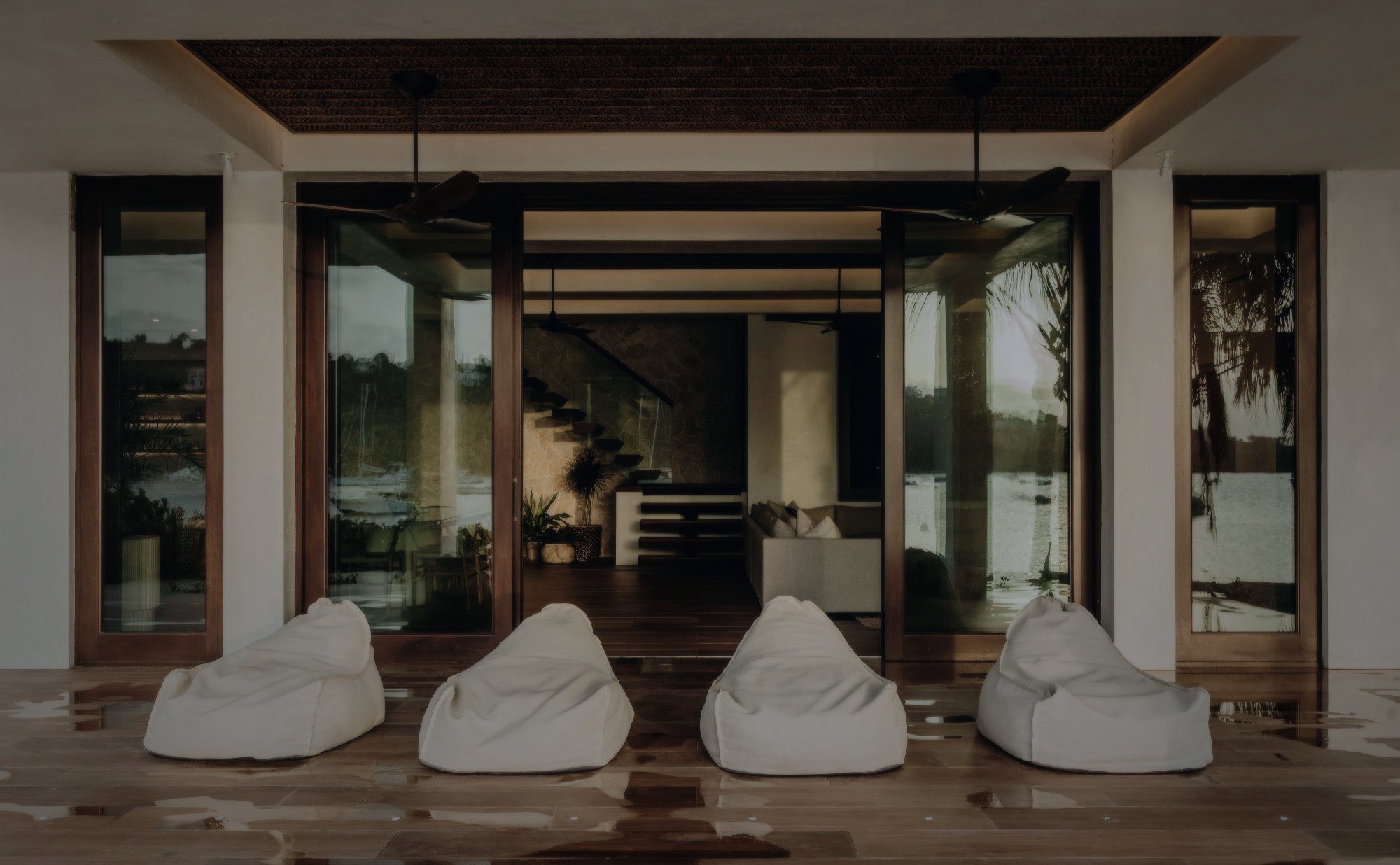
Indo House open-air pavilion looking out to Great Cruz Bay with sailboats moored, St. John USVI
What "Waterfront" Actually Means in St. John Listings
In St. John vacation rental listings, "waterfront" is used broadly. It typically falls into four distinct categories, and knowing which one applies matters before you commit to a week.
Beachfront — the property opens directly onto a gradual sandy beach. You walk outside onto sand and wade in. This is the rarest category on St. John, where most shorelines are rocky or mixed. A handful of properties island-wide qualify, and almost none of them are rental villas.
Direct water access — the property's outdoor space meets the water's edge. There's no separate walk, no stairs down a cliff, no common access area between you and the ocean. You're on the shoreline. The entry may be rocky rather than sandy, but the water is immediately there.
Water proximity — the property sits near the shoreline, perhaps a short walk or a private path down a hillside. Access exists but requires intention. You pack a bag, put on shoes, navigate a few minutes to reach the water.
Water view — the property overlooks the ocean from a hillside or elevated position. These villas can offer panoramic perspectives that beach-level properties don't have. You're watching the water, not swimming in it.
Most of what gets marketed as "waterfront" on St. John falls into the middle two categories. Understanding which type a listing describes before you book determines whether the water becomes a backdrop or an actual part of the stay.
What Direct Shoreline Access Changes
When a villa sits at the water's edge, the rhythm of the stay changes. The water becomes part of the property rather than a destination within it. Morning swims happen before breakfast. Afternoons shift between the pool and the sea without logistics. Guests don't pack a bag to go to the beach — they go when the mood is right, for however long makes sense, and come back.
This is less about luxury as a concept and more about how time actually gets used. Guests who've stayed in both types of properties tend to describe the difference clearly: water access that requires planning gets used less than access that's always there.
There's also a privacy dimension. A private shoreline means no shared beach access, no adjacent guests 15 feet away, no timing your swim around a public schedule. On an island as visited as St. John, where even less-known beaches fill by mid-morning in high season, that's a meaningful variable for guests who came specifically for quiet.
The Great Cruz Bay Shoreline
Indo House sits directly on the Great Cruz Bay shoreline in the southern part of St. John. The bay's position on the south shore carries specific implications for water quality and usability that differ from the island's north shore.
Great Cruz Bay is a protected bay. There's no north Atlantic swell exposure, and trade winds arrive softened rather than full-force. The result is consistent, calm water: flat to small chop most mornings, moderate wind by afternoon. This makes it reliably swimmable across the year. North-facing bays see rougher conditions during winter swell and cannot offer the same consistency.
The bay's depth profile is gradual, transitioning from shallow to deeper water without the abrupt coral-shelf drop that makes some St. John shorelines uncomfortable for casual swimming. Guests can enter the water without navigation experience or specific tide timing.
From the villa's shoreline, guests also have direct access to launch kayaks or paddleboards into the bay. Calm, protected conditions make this practical even for less experienced paddlers. For boat-based day trips and charters, the primary departure point is the National Park Dock in Cruz Bay — the main boat launch hub on the island. Indo House guests have complimentary parking at Lumberyard St. John in Cruz Bay for their entire stay, which makes the dock easily accessible. For small boat pickups, guests can wade in directly from the shoreline path at the property. Private docks are exceptionally rare in St. John: there are only two on the entire island, and neither is associated with a rental property.
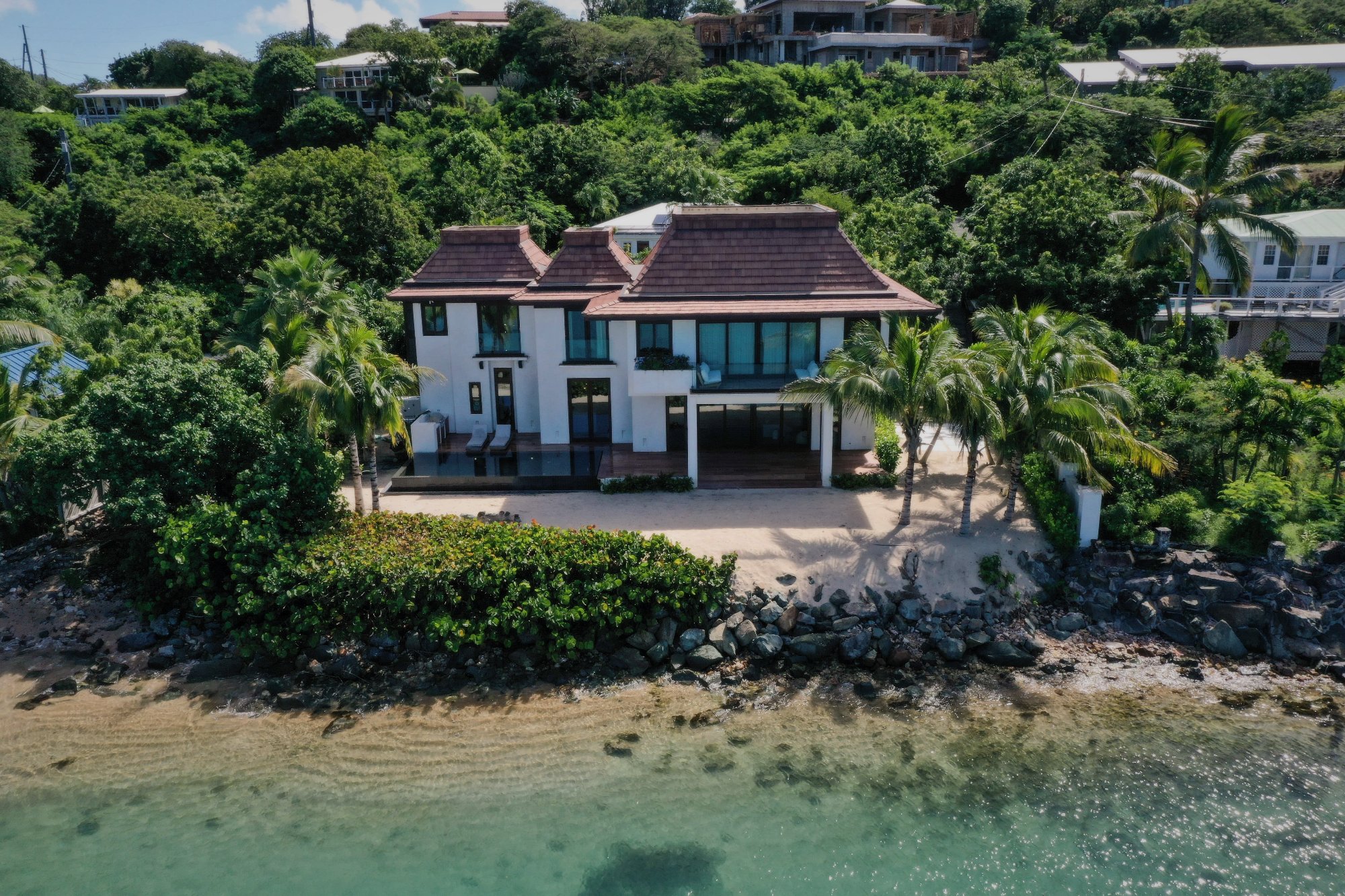
Indo House from the pool deck — the sandy shoreline and bay are at the same level.
How the Infinity Pool Relates to the Bay
The infinity edge pool at Indo House is positioned to align visually with the water — the pool's far edge disappears into the bay horizon. That's a deliberate design decision: the pool functions as a transition between the villa's interior and the open water, not as a standalone feature separate from the view.
The two aren't redundant. The pool is filtered, temperature-stable, and requires no navigation. The bay offers open water, depth, and the specific quality of swimming in the ocean rather than a contained space. Most guests use both, at different times and for different reasons. Neither replaces the other.
The pavilion at Indo House, open to the bay — Great Cruz Bay in frame.
What Varies Across Waterfront Villas
Not all direct-access waterfront properties are equivalent. Several variables matter beyond the category label.
Shoreline type and beachfront vs. waterfront. The distinction between beachfront — walking outside directly onto a gradual sandy beach — and waterfront with a rocky or mixed entry matters more than most listings make clear. Sandy shorelines allow direct wading with no equipment; rocky ones require water shoes and some navigation before you're swimming. True beachfront villas are rare on St. John. Indo House has a mixed shoreline, primarily rocky at the entry point with calm swimmable water beyond. The infinity pool, positioned at the same level as the bay, removes this as a limitation for most guests most of the time.
Depth profile. A shoreline that drops immediately to deep water suits experienced swimmers but not families with young children. The gradual depth at Great Cruz Bay is more forgiving for casual use.
Swell and wind exposure. Waterfront properties on St. John's north shore (near Trunk Bay, Hawksnest, or Cinnamon Bay) are exposed to Atlantic swells that roughen the shoreline, particularly from November through March. South shore properties sit in a more protected position year-round. This is a meaningful seasonal difference for guests booking in winter.
The pool-to-water relationship. Pool size is less important than where the pool sits relative to the bay. A pool that opens visually and physically toward the water creates a different experience than one positioned toward the road or internal to the property.
A Common Trade-Off: Access vs. Views
Hillside villas in St. John often have more dramatic views than shoreline properties. From 300 feet above sea level, you can see multiple bays, the British Virgin Islands on the horizon, and the curve of the island's coastline in a way that's impossible from beach level.
There's no universal answer to which matters more — it depends on what role the water will actually play in your stay. If the answer is "I want to look at it," a hillside villa with expansive sightlines may serve you better. If the answer is "I want to be in it whenever I want," direct access changes the experience in a way that views cannot replicate.
For families with children, the calculation usually shifts toward access. Dramatic views from a hillside are harder to translate into 8am energy when kids want to swim.
What to Ask Before Booking a Waterfront Villa
A few questions worth raising with any waterfront property manager before finalizing a booking:
Is the shoreline access private or shared? Some waterfront villas share beach or dock access with adjacent properties or a community common area. The listing may not make this clear.
What is the actual swimming assessment? Ask about depth, bottom conditions, and entry point. This isn't about safety warnings — it's about whether the water is comfortable for your group's specific range of ability.
How does boat access actually work? Private docks are nearly nonexistent in the St. John rental market — there are only two on the island, and neither is part of a rental property. Most charters and day trips on St. John depart from National Park Dock in Cruz Bay. Ask specifically how the property handles boat transfers and day trips, and confirm parking logistics for getting to the dock.
What does the water look like by season? For January or February visits, north shore properties may have conditions that make shoreline use uncomfortable for part of the trip. South shore properties hold calmer conditions through winter.
At Indo House, guests have private shoreline access, a calm protected bay, a public floating dock one property over for boat departures, and an infinity pool positioned at the water's edge. If you'd like to see the property or check availability, you can view the villa or view rates and availability directly.
What is the difference between a waterfront villa and an ocean view villa on St. John?
An ocean view villa is set on a hillside with visual access to the water but no direct shoreline connection. A waterfront villa sits at or very near the water's edge with access from the property itself. In St. John listings, "waterfront" is used broadly — the key question is whether you can enter the water directly from the property or whether it requires a separate walk or drive.
Is the water calm enough to swim from a waterfront villa in Great Cruz Bay?
Great Cruz Bay is on St. John's south shore and is protected from north Atlantic swells. The water is calm year-round by island standards, with flat to small chop on most mornings. This makes it reliably swimmable from the shoreline, including for families and less experienced swimmers, in a way that north-facing bays cannot guarantee during winter months.
Do waterfront villas on St. John include boat dock access?
Rarely. Private docks are among the most uncommon amenities on St. John — there are only two on the entire island, and neither is part of a rental property. Most boat-based day trips and charters on St. John depart from National Park Dock in Cruz Bay, which is the island's primary launch hub. At Indo House, guests have complimentary parking at Lumberyard St. John for their entire stay, which makes coordinating from Cruz Bay straightforward. Small boat pickups can also be handled by wading in from the shoreline path at the property. If boat access matters to your trip, ask specifically how pickups and departures are handled rather than assuming dock infrastructure exists.
Can you kayak or paddleboard directly from a waterfront villa?
If the villa has direct shoreline or dock access and equipment on-site, yes. Calm protected bays like Great Cruz Bay are well-suited to kayaking and paddleboarding without a dedicated launch ramp. At Indo House, guests can launch from the property's shoreline directly into the bay.
What is the difference between a beachfront and a waterfront villa on St. John?
Beachfront means you walk outside directly onto a gradual sandy beach and wade in from sand. Waterfront means the property sits at the water's edge, but the entry may be rocky or mixed rather than sandy. True beachfront villas are rare on St. John, where most shorelines are rocky. Most properties marketed as "waterfront" have direct water access but not a sandy beach entry. Indo House is waterfront — the shoreline is mixed, primarily rocky at the entry point, with calm swimmable water beyond. The infinity pool is positioned at the same level and serves as the primary water access point for most guests.
What is the difference between south shore and north shore waterfront access on St. John?
North shore properties face the Atlantic and are exposed to swells that can make shoreline conditions rough, particularly November through March. South shore properties, including those in Great Cruz Bay and Chocolate Hole, sit in a more protected position and maintain calmer water year-round. The difference is most pronounced in winter and affects both swimming conditions and any planned water activities from the property.
Related reading
More from the Journal
Thoughtful guides and perspectives from St. John, written to help you plan with clarity and arrive more at ease.
Planning a group trip to St. John? This guide compares villa rentals vs. hotel rooms with honest cost breakdowns, logistics, and what each option includes.