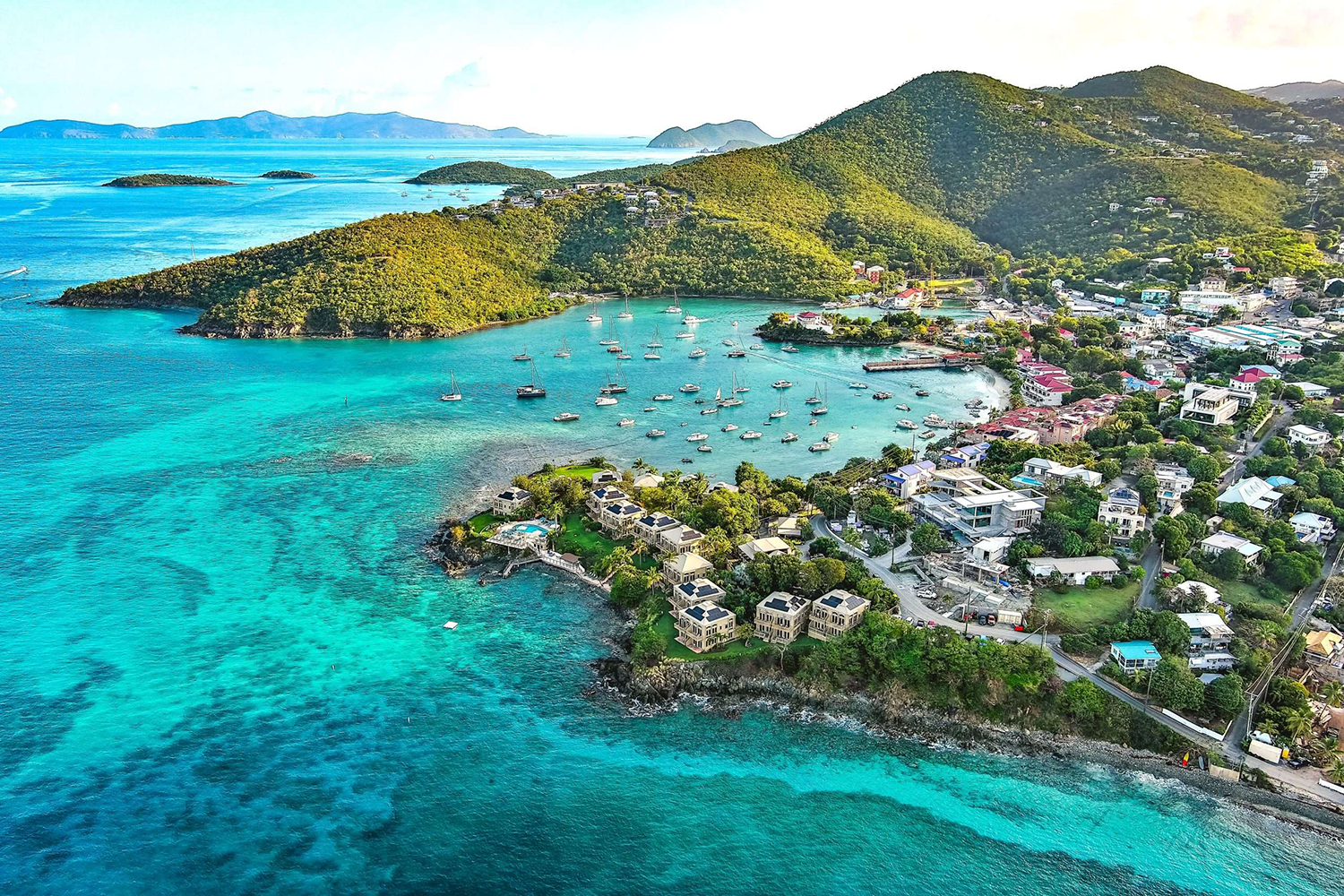
Understanding St. John’s Layout
Most travelers begin by thinking in terms of North Shore versus South Shore, then refine their choice by neighborhood. This framing helps with beaches. The North Shore holds Trunk Bay, Cinnamon Bay, and Hawksnest, while the South Shore curves around quieter bays and residential areas. But geography alone doesn’t tell the full story.
Cruz Bay, the island’s only town, sits at the western tip where ferries arrive from St. Thomas. The South Shore neighborhoods extend east from Cruz Bay along a winding coastal road. The North Shore is largely national parkland with limited development, though a few enclaves offer private estates. Coral Bay anchors the island’s eastern end, and beyond it, the East End stretches toward the most remote points. The interior hills offer elevation, views, and cooler temperatures, trading beach proximity for perspective.
The roads matter. St. John’s terrain is steep and winding, and what looks short on a map can take longer than expected. Centerline Road crosses the island’s spine, connecting Cruz Bay to Coral Bay in about twenty minutes under normal conditions. North Shore Road hugs the coastline past the famous beaches. Neither is fast, and both require attention, especially at night or after rain.
Understanding St. John neighborhoods and their layout helps calibrate expectations. A property on the North Shore might be closer to Trunk Bay but farther from groceries. A place in Coral Bay offers seclusion but means planning around the drive to Cruz Bay. Every location involves tradeoffs worth weighing before you book.
Cruz Bay
Cruz Bay is the island’s center of gravity. It serves as the arrival point, the service hub, and the closest thing St. John has to a town center.
The ferry from St. Thomas docks here, and the town radiates outward from the waterfront in a compact grid of restaurants, bars, shops, and services. Starfish Market provides groceries. Mongoose Junction and Wharfside Village offer dining and browsing. This is where nightlife exists, such as it is: a few bars with live music, tables spilling onto patios, the low hum of visitors and locals mixing after dark.
Staying in or near Cruz Bay means convenience above all else. You can walk to dinner, provision without a car, and reach the ferry quickly for day trips to St. Thomas or the British Virgin Islands. The tradeoff is energy. Cruz Bay hums during the day with arriving visitors and taxi traffic. Accommodations here feel less secluded than elsewhere, and the pace is faster, relative to the rest of St. John, which still moves slowly by any mainland measure.
Cruz Bay suits travelers who prioritize walkability and social access, or those who want a central base for exploring without depending entirely on a vehicle.
North Shore
The North Shore is synonymous with St. John’s most celebrated beaches. Trunk Bay, Cinnamon Bay, Hawksnest, Maho Bay: these are the stretches of sand that draw visitors from around the world. The coastline here falls within the national park, and the landscape feels appropriately protected. Forested hillsides meet clear water along a relatively undeveloped shoreline.
North Shore tradeoffs at a glance:
• Closest access to famous beaches
• Dramatic views and morning light
• Farther from Cruz Bay for groceries, dining, and ferry access
• Dark, winding roads after dinner
North Shore Estates
Staying on the North Shore means proximity to these beaches, often within a few minutes’ drive. Properties here command views across the water, and the morning light on this coast is particularly striking. The tradeoff is distance from town. Groceries, restaurants, and the ferry require more planning.
Within the North Shore, Peter Bay stands apart as a gated enclave known for architectural consistency and privacy. This peninsula offers controlled access and a cohesive design sensibility. Peter Bay suits travelers seeking seclusion within reach of the famous beaches.
Catherineberg
Catherineberg sits on the slopes above the North Shore, near the ruins of historic sugar plantations. The elevation provides views and breezes, while the location offers relatively quick access to the beaches below. Properties here are limited and tend toward the private.
Catherineberg suits travelers who want North Shore proximity with hillside elevation. It offers a combination of beach access and cooler, quieter evenings.
For travelers who plan their days around the island’s most iconic beaches, the North Shore offers unmatched access, with tradeoffs that reward preparation.
South Shore
The South Shore stretches east from Cruz Bay, encompassing the residential neighborhoods where many visitors choose to stay. These areas share proximity to town and a quieter character than Cruz Bay itself. They vary in waterfront access, elevation, and seclusion.
South Shore characteristics at a glance:
• Residential atmosphere
• Close to Cruz Bay amenities
• Quieter than town, more accessible than Coral Bay
• Mix of waterfront and hillside properties
Great Cruz Bay
Just south of Cruz Bay, Great Cruz Bay occupies a quieter stretch of shoreline while remaining close to town. The neighborhood is largely residential, with properties positioned along the water or on hillsides overlooking the bay. The feeling here is calmer than Cruz Bay. There is no foot traffic, no commercial activity. But amenities remain a short drive away.
Indo House is located in Great Cruz Bay, positioned directly on the water with the privacy that draws travelers to villas. The proximity to Cruz Bay, about five minutes by car, means easy access to restaurants and provisions without sacrificing the quiet of a residential setting.
Great Cruz Bay suits travelers who want balance. It is close enough to town for convenience, removed enough to feel like a retreat. The area works particularly well for those who value waterfront access and calm mornings over walkability.
Chocolate Hole
Chocolate Hole sits adjacent to Great Cruz Bay, sharing its proximity to Cruz Bay but with a slightly more tucked-away feel. The neighborhood takes its name from a protected cove that once sheltered trading vessels. This is a place that has been settled quietly for a long time.
Properties here tend to occupy hillsides rather than the waterfront, which means many offer elevated views and breezes rather than direct shore access. The roads wind through residential terrain, and the atmosphere is private and established. Chocolate Hole appeals to travelers who prefer a residential setting. Neighbors rather than tourists. Quiet rather than activity.
The tradeoff is slightly more distance from the water for some properties, and the need to drive for any outing. For those who value seclusion over immediacy, Chocolate Hole offers a settled, unhurried quality that is harder to find closer to town.
Fish Bay, Rendezvous, and Klein Bay
This stretch of the South Shore extends east from Chocolate Hole, encompassing several small bays and residential areas. Fish Bay is the largest, with properties scattered along its hillsides. Rendezvous and Klein Bay are smaller, quieter, and more exclusive.
These neighborhoods share a character: residential, private, oriented toward the water but not always directly on it. They appeal to travelers who want the South Shore’s proximity to Cruz Bay without the relative density of Chocolate Hole or Great Cruz Bay.
Ditleff Point
Ditleff Point extends into the water between Fish Bay and Rendezvous Bay. It offers a more remote feel while remaining on the South Shore. Properties here are limited and tend toward privacy, with water access that feels more personal than public.
Calabash Boom, John’s Folly, and Salt Pond
These small neighborhoods cluster along the southern coastline as it curves toward Coral Bay. They are less developed than the areas closer to Cruz Bay, with limited road access and a rugged, end-of-the-road character. Salt Pond Bay, one of St. John’s quieter beaches, lies nearby, accessible by trail.
These areas suit adventurous travelers who want seclusion and don’t mind unpaved roads or limited infrastructure.
For travelers seeking proximity to Cruz Bay with residential calm, the South Shore offers the widest range of options and the clearest balance between access and retreat.
East End and Coral Bay
The eastern third of St. John operates on a different rhythm than the rest of the island. Distance from Cruz Bay filters out travelers seeking convenience. What remains are those who come specifically for quiet, community, and space.
East End and Coral Bay characteristics at a glance:
• Twenty-plus minutes from Cruz Bay
• Genuinely remote feel
• Local community atmosphere
• Limited dining and services
• Trade winds and open views toward the British Virgin Islands
Coral Bay
Coral Bay anchors the island’s eastern end. The town itself is small: a handful of restaurants, a boatyard, a general store. The surrounding hills are dotted with properties that prioritize seclusion over convenience. This is St. John at its most laid-back, where the pace drops noticeably and the community feels distinctly local.
Reaching Cruz Bay from Coral Bay takes about twenty minutes. This filters out travelers who want frequent access to the ferry, nightlife, or varied dining options. What you gain is quiet. The eastern coastline feels different from the rest of the island. It is more exposed, more remote, oriented toward the open Atlantic and the British Virgin Islands on the horizon.
Coral Bay suits travelers who want genuine seclusion and don’t mind planning around distance. It rewards those who are content to stay put, explore the eastern beaches, and embrace a slower tempo. For visitors who find Cruz Bay too busy, Coral Bay offers an antidote.
East End
Beyond Coral Bay, the East End extends toward St. John’s outermost points: Privateer Bay, Hansen Bay, the road to Haulover. This is the island at its most open. Trade winds move freely. Views stretch across the water toward Tortola and Virgin Gorda. The sense of distance from everything else becomes palpable.
Properties on the East End tend toward the residential and understated. This isn’t a destination for travelers seeking proximity to anything. It’s a destination for those seeking space. The drive to Cruz Bay lengthens further, and amenities become even more limited. For travelers who want solitude, open air, and the feeling of being at the edge of things, the East End delivers.
The East End suits those who prioritize calm above all else and are comfortable with the logistics of true remoteness on a small island.
For travelers who value seclusion over convenience and don’t mind the drive, the eastern side of St. John offers quiet that the rest of the island cannot match.
Interior and Hillside Areas
Not every property sits along the coast. St. John’s interior hills offer a different experience: elevation, cooler temperatures, panoramic views, and distance from the beaches below.
Interior area characteristics at a glance:
• Cooler temperatures and consistent breezes
• Sweeping views, often across both coasts
• Requires driving to reach any beach
• Quieter and more removed from island activity
Gifft Hill
Gifft Hill occupies the high ground between Cruz Bay and Coral Bay, straddling Centerline Road as it crosses the island’s spine. Properties here sit at elevation, which means cooler temperatures, consistent breezes, and sweeping views across both coasts. The tradeoff is access. Gifft Hill is central to nothing in particular, requiring a drive down to either side of the island for beaches, restaurants, or provisions.
Gifft Hill suits travelers who value views and climate over proximity, and who don’t mind the winding drive that comes with hillside living.
Bordeaux and Carolina
The island’s highest areas, Bordeaux Mountain and the Carolina corridor, offer a different experience entirely. Properties here sit at elevation, surrounded by forest rather than coastline. Views can be spectacular, particularly toward the British Virgin Islands, but the feeling is distinctly removed from beach life.
Bordeaux and Carolina suit travelers who prioritize cool air and privacy over water access. Reaching any beach requires a meaningful drive, but the reward is quiet and perspective.
How to Choose the Right Neighborhood
The right neighborhood depends on how you want your days to unfold. When considering the best areas to stay in St. John, a few questions help clarify the choice:
How important is walkability?
• Cruz Bay is the only area where you can walk to dinner and shops.
• Everywhere else requires a car for nearly everything.
What’s your relationship with driving?
• St. John’s roads are steep, winding, and dark at night.
• If minimizing driving matters, stay close to Cruz Bay.
• If driving doesn’t bother you, the entire island opens up.
How much seclusion do you want?
• Cruz Bay offers energy and convenience but limited privacy.
• South Shore neighborhoods provide middle ground.
• Coral Bay and the East End deliver genuine remoteness.
Which beaches matter most?
• North Shore stays place you closest to Trunk Bay, Cinnamon Bay, and Maho Bay.
• South Shore and Coral Bay orient you toward quieter, less-visited stretches.
How long are you staying?
• Short trips benefit from central locations that minimize logistics.
• Longer stays can absorb the tradeoffs of more remote areas.
There’s no formula for the right choice. Only the honest assessment of what you value and what you’re willing to trade.
Why Neighborhood Matters for Villa Stays
For travelers staying in private villas, neighborhood choice shapes the experience even more than it does for hotel guests. A villa is a home base, not just a room to sleep in. You’ll cook meals, spend mornings on the deck, and return each evening to a specific place with a specific character.
The neighborhood determines what those daily rhythms feel like. A villa in Great Cruz Bay might mean kayaking from your dock in the morning and reaching Cruz Bay for dinner in five minutes. A villa on the East End might mean watching the sunrise over the British Virgin Islands and embracing the quiet that comes with distance.
Villa stays also involve logistics that hotels handle invisibly. You’ll need to provision groceries, manage a vehicle, and navigate unfamiliar roads. A central location simplifies these tasks. A remote location requires more planning but rewards you with the privacy and space that draw people to villas in the first place.
If you’re considering a villa, read about what villa rentals on St. John typically include and how they differ from resort stays. Understanding the format helps clarify which neighborhood tradeoffs matter most for your trip.
A Thoughtful Way to Experience St. John
St. John resists the patterns of more developed Caribbean destinations. There’s no strip of beachfront hotels, no concentrated resort zone, no single answer to where visitors should stay. The island’s accommodations scatter across its terrain, and each pocket offers something different.
This decentralization is part of what makes St. John distinctive. The experience changes meaningfully depending on whether you wake up in Cruz Bay or Coral Bay, on a hillside or at the water’s edge. Choosing well requires understanding these differences not as a checklist of amenities, but as variations in daily life.
The neighborhoods described here aren’t rankings. They’re translations. Attempts to convey what each area feels like so you can find the one that fits. St. John rewards travelers who arrive with realistic expectations and an openness to the island’s particular rhythm. The right neighborhood makes that rhythm feel natural from the first morning.
Frequently Asked Questions
Which neighborhood is best for first-time visitors to St. John?
Cruz Bay and the South Shore neighborhoods — particularly Great Cruz Bay and Chocolate Hole — are the most practical starting point for first-time visitors. Cruz Bay puts you within walking distance of restaurants, groceries, and the ferry. Great Cruz Bay adds waterfront access while keeping you five minutes from town. Both give you a base that functions well without extensive island knowledge.
Do you need a car to get around St. John?
For most visitors, yes. St. John has limited taxi coverage outside of the main tourist corridors, and the beaches, trails, and restaurants worth exploring are spread across an island with steep, winding roads. A rental car — typically a Jeep or SUV — is the practical way to move freely. Visitors staying in Cruz Bay can manage parts of a trip without one, but anyone staying in Great Cruz Bay, Chocolate Hole, or beyond will want their own vehicle.
Is it better to stay on the North Shore or South Shore of St. John?
Neither is objectively better — the right choice depends on your priorities. The North Shore puts you closest to Trunk Bay, Maho Bay, and Cinnamon Bay, but it's farther from Cruz Bay and the roads back to town are winding and dark at night. The South Shore keeps you closer to services, amenities, and the ferry, with calmer water and a quieter residential character. Families, repeat visitors, and anyone who values easy provisioning tend to prefer the South Shore.
How far is Coral Bay from Cruz Bay?
Coral Bay sits at the eastern end of St. John, approximately twenty minutes from Cruz Bay by car along Centerline Road under normal traffic conditions. The drive is scenic and the road is manageable, but it represents a meaningful distance on an island this size. Coral Bay has its own small cluster of restaurants and services, but visitors based there will spend more time driving if they want frequent access to the North Shore beaches or the Cruz Bay ferry.