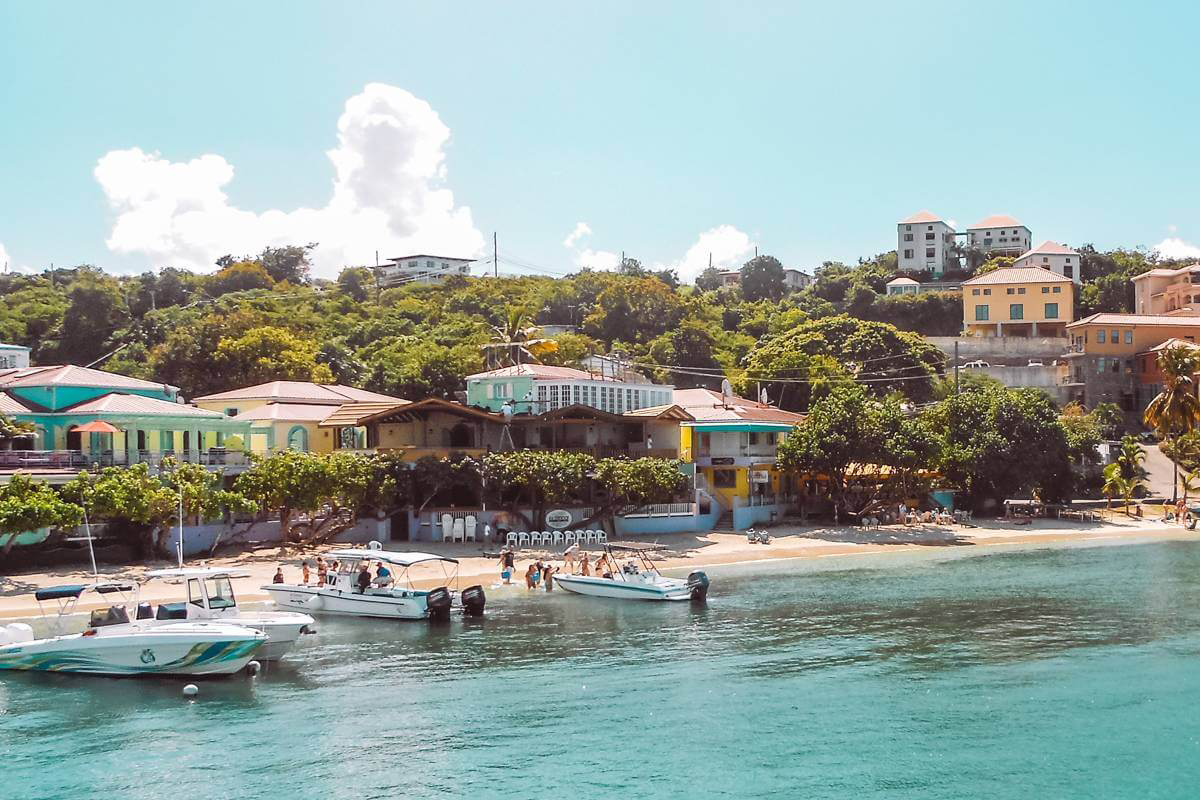
Cruz Bay as Arrival Point
The ferry from St. Thomas delivers every visitor to Cruz Bay. There is no other way to reach St. John by scheduled service. The dock is modest, open-air, and efficient. Passengers walk off, collect their bags from the designated area, and step directly into town.
For many, this arrival marks the true beginning of a St. John trip. The crossing from Red Hook takes about twenty minutes, and by the time the boat pulls into Cruz Bay harbor, the shift in pace has already started. The town itself is walkable, the scale is human, and the overwhelming feeling is of having reached somewhere smaller and quieter than where you came from.
Taxis wait at the ferry terminal, open-air trucks with bench seating in the back. Rates are fixed and posted. Villa guests heading to the South Shore neighborhoods typically pay between fifteen and twenty dollars per person. Those who arranged rental cars on St. John walk a few blocks to the agency offices clustered near the waterfront.
The arrival experience in Cruz Bay is straightforward. No lines, no chaos, no pressure. The town absorbs new arrivals quietly and sends them on their way. For a detailed guide to the ferry crossing and what to expect, see our article on how to get to St. John.
Mongoose Junction and Wharfside Village
Two shopping complexes anchor Cruz Bay's commercial center. Mongoose Junction and Wharfside Village sit within easy walking distance of the ferry and offer what visitors need without feeling designed for tourists alone.
Mongoose Junction occupies a stone courtyard tucked just off the main road. The architecture is deliberate, tropical, and shaded. Galleries sell local art and jewelry. Clothing boutiques carry resort wear that leans more toward quality than kitsch. A few cafés serve breakfast and coffee. The space invites browsing without urgency, and the atmosphere remains calm even during high season.
Wharfside Village sits closer to the waterfront. The complex includes additional shops, a few restaurants with harbor views, and practical services like a bookstore and internet café. The energy here tilts slightly more commercial than Mongoose Junction, but the scale remains contained. This is not a mall. It is a few buildings arranged around shared space, serving both island residents and those passing through.
Neither complex demands much time unless you want to spend it. They function as gathering points, places to orient yourself on arrival day or to pass an hour between errands.
Starfish Market and Provisioning
Starfish Market is the primary grocery on St. John. Located just uphill from the Cruz Bay center, the store serves as the provisioning hub for villa guests, boat owners, and locals. The selection is comprehensive for an island of this size, though prices reflect the reality of importing nearly everything by barge.
Fresh produce, meat, seafood, and a well-stocked wine section fill the aisles. The deli prepares sandwiches and ready-to-eat meals. Basics like coffee, bread, and pantry staples are available, along with specialty items that cater to the villa rental market: high-quality olive oils, imported cheeses, craft beer.
For villa guests planning to cook, Starfish Market provides what you need with a few caveats. Selection can vary by season and by what arrives on each shipment. If you have specific requirements, provisioning services can stock your villa before arrival, ensuring nothing is missing when you arrive. Otherwise, expect to visit Starfish Market early in your stay and plan meals around what is available.
The store operates daily, with hours that extend into early evening. Parking is limited but manageable. Most villa guests visit once or twice during their stay, restocking as needed rather than attempting to provision for an entire week in a single trip.
Cruz Bay Restaurants and Dining
The restaurant scene in Cruz Bay reflects the island's character: unpretentious, varied, and grounded in place. Options range from casual waterfront tables to quieter spots tucked into side streets. Reservations help during high season, particularly for dinner, but the atmosphere remains relaxed.
Fresh seafood anchors many menus. Caribbean flavors appear alongside American comfort food and the occasional nod to international influences. Quality varies, as it does anywhere, but the better restaurants share a common trait: they cook with intention and serve food that tastes like it was made here, not shipped in frozen.
Breakfast and lunch tend toward the casual. Coffee shops near the ferry serve pastries and morning meals. Sandwich counters and food trucks provide midday options. Dinner offers more variety and ambition, with waterfront tables that fill as the light softens over the harbor.
Specific recommendations shift over time as restaurants open, close, or change hands. The reliable approach is to ask locals, check recent reviews, and remain open to discovering places on your own. Cruz Bay rewards those who wander.
Evening in Cruz Bay
Evening brings a shift in energy. The day-trippers leave on the last ferries. The town settles into a quieter rhythm, and the waterfront comes alive in a low-key way.
A few bars host live music, typically acoustic sets or small bands playing reggae, rock, or island standards. Outdoor tables fill with a mix of visitors and locals. Conversations happen easily. The atmosphere is social without being loud, and the scale ensures you are never far from familiar faces if you return more than once.
This is not nightlife in any conventional sense. There are no clubs, no late-night scenes that extend past midnight. Cruz Bay after dark is a few drinks, some music, and the kind of evening that ends early because mornings on St. John start with light worth waking for.
For travelers who prefer quiet evenings, the South Shore neighborhoods offer a different rhythm. But for those who want some social contact after dinner, Cruz Bay provides it without excess.
Cruz Bay Ferry Schedule and Movement
The ferry schedule shapes the rhythm of Cruz Bay more than any other factor. Arrivals bring pulses of activity. Departures clear the waterfront. Between crossings, the town returns to its baseline pace.
Passenger ferries run throughout the day from Red Hook on St. Thomas, with service starting early in the morning and continuing into the evening. Frequencies are highest during midday and taper off after dark. The schedule shifts slightly by season, and checking current times before planning a trip off-island is essential.
The car ferry operates separately and far less frequently. Vehicles board at designated times, and reservations are necessary during high season. For visitors staying in Cruz Bay or nearby neighborhoods, the passenger ferry provides all the mobility needed. Those staying farther afield typically rely on rental vehicles rather than coordinating around ferry schedules.
Understanding the ferry rhythm helps you move through Cruz Bay with less friction. Arrive just after a ferry docks, and the town feels busier. Visit mid-morning or late afternoon, and the pace slows. The town never feels crowded, but timing still matters.
Staying Near Cruz Bay
Cruz Bay itself has limited overnight accommodations. The town is not residential in character, and most visitors stay in nearby neighborhoods rather than in Cruz Bay proper. This separation preserves the town's function as a hub while keeping the overnight experience quieter and more private.
The South Shore neighborhoods closest to Cruz Bay include Great Cruz Bay and Chocolate Hole, both within five minutes by car. These areas offer the proximity to town that some travelers prioritize while maintaining the privacy and calm that draw people to St. John in the first place.
Great Cruz Bay sits directly south of the ferry dock, a waterfront neighborhood with residential properties along the shoreline. The area feels removed from Cruz Bay's activity while remaining close enough for easy access. Indo House is located here, positioned on the water with the quiet that defines this stretch of coast.
Chocolate Hole extends slightly farther south and east, occupying hillsides and tucked-away coves. The neighborhood is established, residential, and favored by those who want proximity to Cruz Bay without sacrificing seclusion.
Both neighborhoods reward travelers who value convenience balanced with privacy. You can reach Cruz Bay for groceries or dinner in minutes, yet the spaces you return to feel distinctly separate from town. For a detailed comparison of St. John's neighborhoods and what each offers, see our guide to where to stay on St. John.
Movement Beyond Cruz Bay
Cruz Bay functions as the gateway, but it is not the destination. The island unfolds beyond the town limits. North Shore Road leads to the beaches. Centerline Road climbs over the hills toward Coral Bay. Side roads descend to quieter bays and residential pockets.
Most visitors pass through Cruz Bay repeatedly during their stay. Provisioning brings you back. Dinner reservations bring you back. The ferry schedule dictates at least two trips, on arrival and departure. But the days themselves happen elsewhere, in the national park, on the beaches, or at the villa where you are staying.
This rhythm is part of Cruz Bay's character. The town serves without demanding attention. It provides what the island needs and steps aside. There is no expectation that you linger beyond necessity, and no sense that you have missed something essential if you do not.
Cruz Bay as Context
Cruz Bay matters because it shapes how St. John works. The town is the logistical center, the provisioning hub, and the social anchor. Understanding it helps you navigate the island more smoothly and set realistic expectations.
The town is not picturesque, but it is honest. It handles the practical realities of island life without pretense. For visitors staying in private villas elsewhere on St. John, Cruz Bay becomes a familiar touchpoint rather than a destination, a place you return to when you need something and leave again when you have it.
This distinction matters. St. John is not about its town. The island's appeal lies in what surrounds Cruz Bay: the protected coastline, the quiet neighborhoods, the rhythm that slows as you move farther from the ferry dock. Cruz Bay simply makes the rest of it possible.
For those staying at Indo House or other properties in Great Cruz Bay, the proximity to town provides convenience without compromising the quiet that defines a villa stay. You are close enough to reach Cruz Bay in minutes, far enough to feel the separation. To learn more about staying in this area, visit The Villa page.
Virgin Islands Villas also covers Cruz Bay in its St. John area guides, along with the villas listed in and around town.
Frequently Asked Questions
How long does it take to walk around Cruz Bay?
The walkable commercial core of Cruz Bay is compact enough to cover in about 20 to 30 minutes at a casual pace. The main street along the waterfront, the Mongoose Junction complex, and the surrounding streets are all within a short walk of the ferry dock. If you want to explore beyond the main corridor, including the National Park Visitor Center and the residential streets above town, add another 15 to 20 minutes.
Is Cruz Bay crowded?
It can be, particularly on days when day-trippers from St. Thomas are arriving. The busiest windows are mid-morning to early afternoon, when ferries bring visitors who spend a few hours on St. John before returning. Evenings tend to be quieter, and the town takes on a different character once the day-trip crowd heads back. Visitors staying on the island find that avoiding the main waterfront during peak mid-day hours makes the town considerably more pleasant.
Where do I park in Cruz Bay?
Parking in Cruz Bay is limited and can be difficult during busy periods. A public parking area sits near the ferry dock, and some street parking is available on surrounding roads. Most visitors arriving by ferry do not need to park in town — taxis and rental car pickups handle the transition. If you are driving in from elsewhere on the island, arriving early in the day or after the mid-day rush gives you the best chance of finding a spot near the commercial center.
Can I walk to beaches from Cruz Bay?
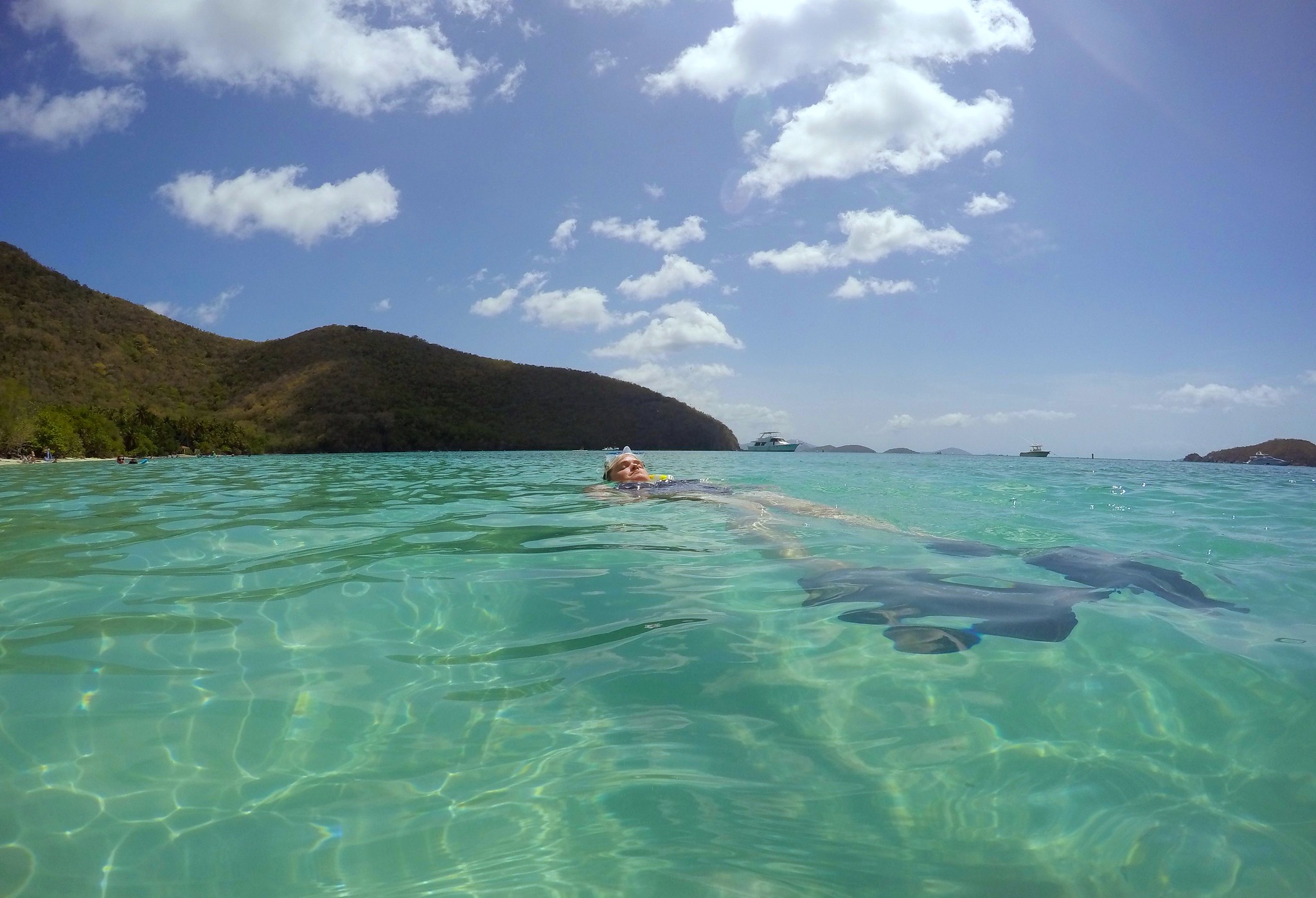
The beaches directly accessible by foot from Cruz Bay are limited. The closest swimming area is near the ferry dock itself, which is functional but not the island's most scenic option. Salomon Beach is reachable via the Lind Point Trail, roughly a 20-minute walk. For the North Shore beaches — Trunk Bay, Hawksnest, Maho Bay — you will need a car or taxi. Distances that look short on a map involve winding roads with meaningful elevation change.