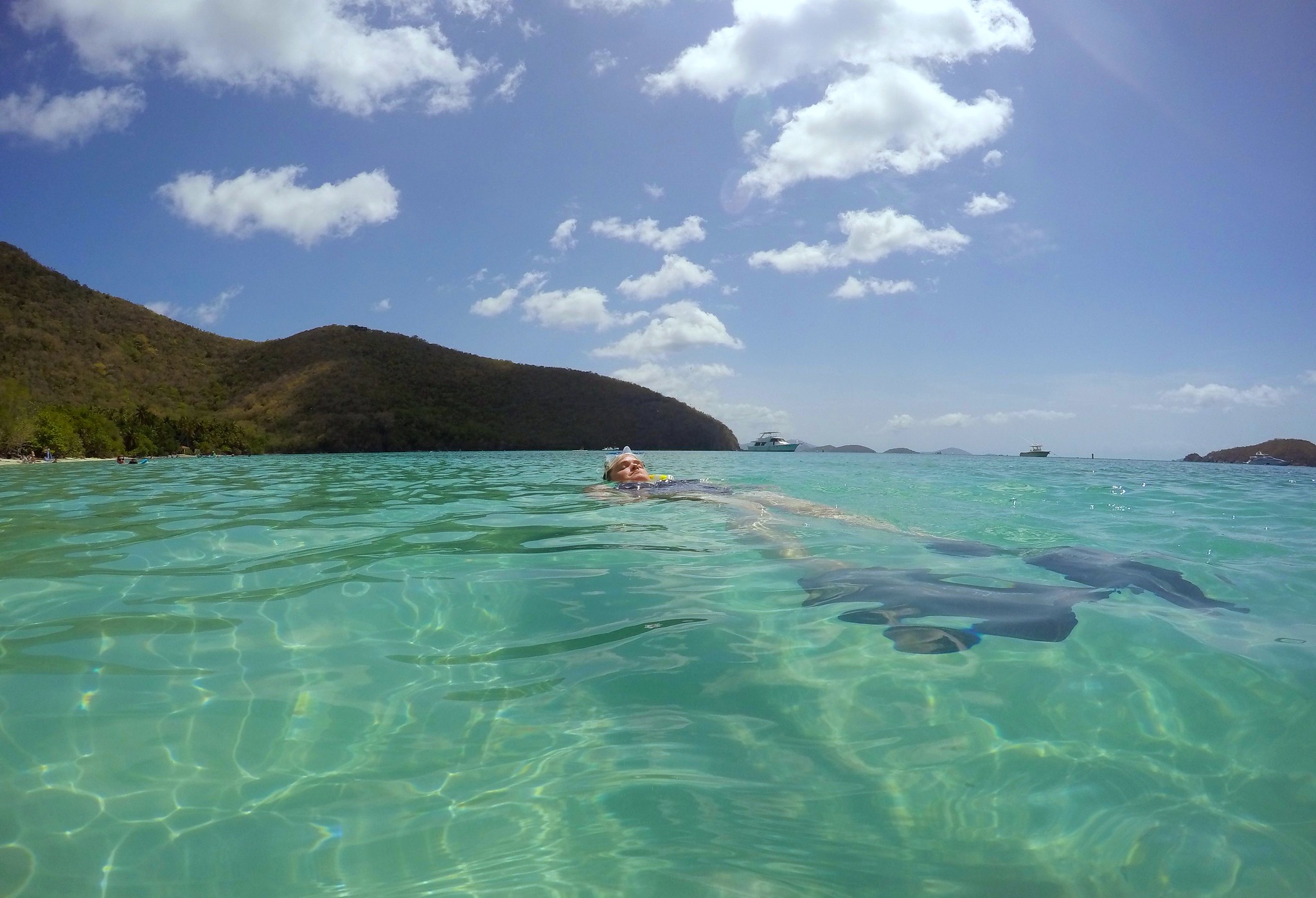
If you are searching for calm beaches St. John visitors can actually swim without much effort, the useful distinction is not north shore versus south shore. It is protected bay versus open exposure, and morning versus afternoon. On St. John, a beach can look placid at 8:30 a.m. and feel noticeably busier and choppier by midday once parking fills and the trade winds build.
From Indo House in Great Cruz Bay, that decision comes up often. The water below the villa is usually calmest early, thanks to the sheltered south-shore setting and direct shoreline access, but guests looking for an easy sandy entry usually head to the north shore instead. The question is not which beach is most famous. It is which one stays gentle enough for the kind of day you want.
For most swimmers, the shortlist is straightforward: Maho for the easiest shallow water, Hawksnest and neighboring Gibney for a calmer north-shore cove closer to Cruz Bay, Honeymoon when you want a protected bay and do not mind extra access friction, Francis when quiet matters more than amenities, and Cinnamon when you want room to spread out. The tradeoff is that the same beaches people choose for easy swimming are also the ones where parking pressure shows up first.
Maho Bay Beach on St. John showing shallow calm water and low green hills
There is no beach on St. John that stays uniformly flat in every condition. The beaches that feel easiest for swimming are the ones tucked into north-shore bays rather than facing the more exposed southern and southeastern coastline. Virgin Islands National Park notes that North Shore Road, Route 20, is the main access corridor for Hawksnest, Trunk Bay, and Cinnamon Bay, and also warns that parking at popular north-shore beaches can fill by 10 a.m. That matters because many visitors confuse calm water with convenience. On St. John, the calmest swimmable beaches are usually the ones that require the earliest start.
The other variable is what kind of swimmer you have in mind. Adults who just want an easy float often do well at Maho or Gibney. Families with young children usually care more about shallow entry and low wave action than they do about snorkeling depth. Stronger swimmers may prefer Francis or Cinnamon, where there is more room to move but a little less of the sheltered, pool-like feel that makes Maho so easy.
If you are still sorting out ferry timing, rental cars, or whether you want to rely on taxis, the guide on how to get to St. John is worth reading first. Calm-water beaches reward early arrival, and the arrival logistics shape how realistic that is on your first full day.
Which Calm Beaches on St. John Are Easiest to Swim
Maho Bay
For straightforward, low-stress swimming, Maho is the clearest first recommendation. The bay is shallow, the bottom is mostly forgiving, and the shape of the beach keeps the water gentler than more exposed parts of the island. This is why first-time visitors, children, and less confident swimmers tend to settle in here quickly. It is also why Maho gets busy.
The beach is strongest when your goal is wading, floating, and light snorkeling rather than covering distance. You can walk out gradually, stop wherever the depth feels comfortable, and still see turtles surfacing over the seagrass beds. Maho Crossroads, directly across the road, adds a practical layer that many other beaches do not have: food, shade, restrooms, and rental gear. That makes the day easier, but it also means the area has more foot traffic and less of the quiet, stripped-back feel some guests expect from St. John.
If you want a fuller read on Maho's tradeoffs, the dedicated Maho Bay Beach guide goes deeper. For this article's purpose, the key point is simpler: Maho is the easiest answer when someone asks for calm water first and atmosphere second.
Hawksnest Beach and Gibney Beach
Hawksnest is often the better answer for guests staying near Cruz Bay or Great Cruz Bay because it removes some of Maho's friction without giving up easy swimming. NPS describes Hawksnest as a family beach, notes the shade from tall trees, and confirms limited parking that often fills by mid-morning. The beach is short, readable, and usually calmer than it looks from the road.
The eastern side has better snorkeling, but swimmers who want the gentlest water usually end up favoring the western side of Hawksnest Bay or walking over to Gibney Beach. Gibney is smaller and quieter, with a more protected feel once you are on the sand. The tradeoff is that it is not built for a full-service beach day. If you want snack bars, gear rentals, or a lot of structure, choose Maho instead. If you want a calmer cove that still feels close to town, Hawksnest and Gibney are the more useful pair.
From Indo House, Hawksnest is one of the easier north-shore pivots when guests decide after breakfast that they want a beach rather than a full outing. It is also one of the better choices when you want to swim first and snorkel second.
Hawksnest Beach calm cove on St. John showing the compact protected shoreline
Honeymoon Beach
Honeymoon is one of the more protected places to swim on St. John, but it is not the simplest one to reach. That distinction matters. The bay itself is usually gentle, and the shoreline is compact enough that the whole setting feels sheltered. For easy swimming, that works in its favor. For logistics, it does not.
As of April 2026, Virgin Islands National Park's Caneel access map shows shuttle parking for Honeymoon Beach and notes no pedestrian access from that parking area itself. In practice, access planning still matters more here than at Hawksnest or Maho. If you are already in Cruz Bay and do not mind adding a trail or shuttle step, Honeymoon can be worth it. If you want a beach day with the fewest moving parts, it usually is not the first pick.
The reason people still choose it is that the water often feels quieter than the busier north-shore names suggest. The reason some guests skip it is equally clear: the extra access layer makes it less appealing for a spontaneous half-day.
Honeymoon Beach protected bay on St. John with sailboats at anchor
Francis Bay
Francis is the quietest beach on this list that still works well for straightforward swimming. NPS describes it as one of the quieter areas of the park, good for long swims, with rock-shore snorkeling at the north end and a boardwalk behind the beach. That description matches the practical reality. Francis feels broad, open, and low-pressure.
The calm-water case for Francis is strongest for adults and couples who want space more than activity. The entry is easy, the bay is usually gentle enough for a real swim, and the beach does not feel as compressed as Hawksnest or as trafficked as Maho. The tradeoff is that it can feel sparse. There is less built-in energy, less infrastructure, and less payoff for children who want immediate action.
Guests who want the island to go quiet for a few hours tend to be happiest here. Guests who want the easiest possible beach setup usually are not.
Cinnamon Bay
Cinnamon belongs on the list, but lower than many people expect. NPS calls it one of the longest beaches in the park and describes it as suitable for swimming, with parking, restrooms, and access to campground services. All of that is true. The reason it ranks below Maho or Hawksnest for calm swimming is not that the water is rough. It is that Cinnamon is broader and more open, so it feels less protected once wind starts moving across the bay.
For some guests, that is a strength rather than a weakness. Cinnamon gives you room. You can walk, swim, spread out, and avoid the compressed feel of the smaller coves. Families who want space often prefer it for exactly that reason. The tradeoff is that if your standard is very gentle, almost still water, Cinnamon is less consistent than Maho, Gibney, or Honeymoon.
Treat Cinnamon as the spacious option on a calm day, not the default answer for the calmest possible water.
Long shoreline at Cinnamon Bay showing the broad swimming area and tree line
What to Skip if Easy Swimming Is the Priority
Trunk Bay is the obvious omission from the top tier. It is beautiful, swimmable, and worth seeing at least once. It is not the beach we send people to first when the request is specifically calm water and easy swimming. The reason is simple: crowding changes the experience. Once you add entrance logistics, denser parking pressure, and a higher likelihood of sharing the water with a large midday crowd, the beach becomes more of a headline stop than a low-friction swim.
South-shore beaches can also disappoint people who assume that staying near Great Cruz Bay means the calmest beaches will be nearby. The water below the villa is often calmest in the morning, and for some guests that direct shoreline access is enough. But if the goal is a soft sandy entry and a proper beach day, the north shore still wins.
For a wider overview of beach types and use cases, the full St. John beach guide is the better planning piece. This article is narrower on purpose.
How Indo House Guests Usually Choose
The useful split from Indo House is this: if guests want the simplest calm-water day, they go to Maho early or choose Hawksnest for a shorter outing. If they want quieter water and do not mind more setup, Honeymoon or Francis makes more sense. If they want calm enough water with room to spread out, Cinnamon is the better compromise.
That pattern is one reason where to stay on St. John matters. From Great Cruz Bay, you are close enough to Cruz Bay to pivot north without much planning, then return to a quieter south-shore setting in the afternoon. That balance suits travelers who do not want to stay in the middle of the island's busiest beach traffic but still want access to it.
Indo House works well for that rhythm because the villa is directly on the water, with private parking and a layout that does not force every good swim to happen at a public beach. Some guests spend the morning at Maho or Hawksnest, then come back for a quieter afternoon by the pool and shoreline. Others skip the beach entirely once they realize the water below the house is calm enough for a short swim before breakfast. That is the advantage of being in Great Cruz Bay rather than farther east or deep in the hills.
If your priority is easy swimming, choose the beach based on the day you want, not the one with the biggest reputation. On St. John, calm water is usually available. The real question is how much crowding, access friction, and beach infrastructure you are willing to take with it.
Frequently Asked Questions
Which beach on St. John is calmest for young children?
Maho Bay and Francis Bay are the most consistent recommendations for young children. Both offer shallow, calm water that is manageable for small swimmers, with seagrass beds that limit unexpected depth changes. Maho Bay's sea turtles also give children something memorable to watch from a safe distance. Gibney Beach, adjacent to Hawksnest, is another strong option — its position in a protected cove keeps conditions particularly gentle.
Are there calm beaches on St. John's South Shore?
South Shore beaches tend to be calmer than North Shore beaches as a general rule, because they are sheltered from the trade winds that build chop along the North Shore coast. Great Cruz Bay and the areas surrounding private waterfront properties offer swimming conditions that are typically gentler than Trunk Bay or the exposed sections of the North Shore. The South Shore does not have a signature public beach in the same way the North Shore does, but the waterfront access from private properties is often excellent.
Which St. John beaches are best for paddleboarding or kayaking?
Maho Bay, Francis Bay, and Cinnamon Bay all offer enough protected water to launch and paddle comfortably. Cruz Bay itself is used by paddlers as well. For longer kayaking routes, the stretch between beaches along the North Shore is beautiful in morning conditions before the wind builds. The calmest and most forgiving conditions for paddleboard beginners are typically found at Maho Bay and Francis Bay.
Does the water at calm St. John beaches get rough?
The calmer beaches described here are generally reliable in the mornings, when wind and swell are typically at their lowest. By mid-to-late afternoon, trade winds can build chop at more exposed locations. Traveling early in the day — arriving at the beach before 10 a.m. — consistently produces the best swimming and snorkeling conditions regardless of season. The South Shore and protected cove beaches are more stable throughout the day than the open North Shore stretches.
Related reading
More from the Journal
Thoughtful guides and perspectives from St. John, written to help you plan with clarity and arrive more at ease.
Virgin Islands National Park covers more than half of St. John. Which beaches and ruins to prioritize, what it costs, and how to plan a day from Cruz Bay.
Maho Bay Beach on St. John is a year-round sea turtle habitat. Green and hawksbill turtles feed in the seagrass shallows, often visible from the shoreline.