Salt Pond St John is one of the clearest examples of how different the island can feel once you leave the north shore. This is not the easiest beach day from Great Cruz Bay, and that is the first distinction that matters. For Indo House guests, Salt Pond works best as a deliberate half-day built around both the beach and the trail network beside it, not as a quick swim between other plans.
The setting is the draw. Virgin Islands National Park places Salt Pond Bay on the island's southeastern edge, with a quarter-mile walk from the parking area to the beach and a separate trail onward to Ram Head. The beach itself is calm enough for swimming and casual snorkeling. The tradeoff is that you work a little more for it: longer drive, fewer services, less shade, and real sun exposure once you leave the beach and continue up the trail.
View from Ram Head overlooking Salt Pond Bay and the south shore of St. John
Most visitors first meet St. John through Cruz Bay, the north shore beaches, and the greener hills on that side of the island. Salt Pond sits in another landscape entirely. The vegetation is drier, the terrain feels more open, and the coast has more rock and scrub than the postcard coves people usually compare first. That difference is part of the appeal, but it also changes expectations.
Atlantic-facing coastline near Ram Head with cactus in the foreground
If your reference point is Trunk Bay, Salt Pond will feel less polished and less serviced. There is no entrance sequence, no concentration of beach infrastructure, and no sense that the site is built to carry high volume. NPS describes the route in as an old dirt roadbed to the beach, and that description is useful because it frames the experience correctly. Even before the Ram Head trail begins, this is a place where the landscape does more of the work than the facilities do.
The salt pond itself is not the swimming area. It sits inland from the beach, and it is part of what makes the site look so distinct from above. Most people spend only a few minutes on it, which is the right proportion. The pond gives the area its name and character. The beach and the trails are what shape the day.
For Indo House guests, that distinction matters because the villa already provides shoreline access, an infinity-edge pool, and a quieter waterfront setting back in Great Cruz Bay. Salt Pond makes sense when the goal is not simply getting in the water. It makes sense when you want a different side of the island.
Swimming and Snorkeling at Salt Pond Bay
Salt Pond Bay works well as a swim beach because the curved shoreline and gentle entry keep the water approachable for most visitors. NPS specifically calls out the beach's gentle slope into the water, and that tracks with why families and mixed-ability groups still put it on the list even though it sits far beyond the more frequently visited part of the island.
What actually matters here is where the beach sits in your beach hierarchy. If the priority is pure ease, there are simpler options closer to town. If the priority is a broader beach setup with more infrastructure, north shore beaches cover that better. Salt Pond is stronger when you want a beach that still feels like part of the park rather than part of a beach circuit.
Snorkeling is usually better along the rocky margins than in the sandy center of the bay. That makes Salt Pond a good bring-your-own-gear stop, not a beach where you should expect on-site rentals or a built-out snorkel operation. Packing your own mask and fins at Indo House is straightforward because the villa has the space to stage a real beach morning before you leave. That matters more here than at beaches where you can improvise once you arrive.
The other practical point is shade. There is some coverage near the back of the beach, but this is not a beach where you should assume long, comfortable midday lounging without planning for sun. A morning swim after the trail makes more sense than arriving late and trying to force a full afternoon out of it. For a broader look at how Salt Pond compares with other swimming spots, our guide to the best beaches on St. John places it in the wider beach mix.
Ram Head and Drunk Bay
This is where Salt Pond separates itself. The NPS Salt Pond and Ram Head trail page describes the walk to the beach as about a quarter mile from the parking area, then another 30 to 50 minutes onward to Ram Head depending on pace and stops. It also describes the Ram Head trail as just under a mile, narrow, and steep enough to matter. That is the useful framing. Ram Head is not a technical hike, but it is exposed, rocky, and less forgiving than its mileage suggests.
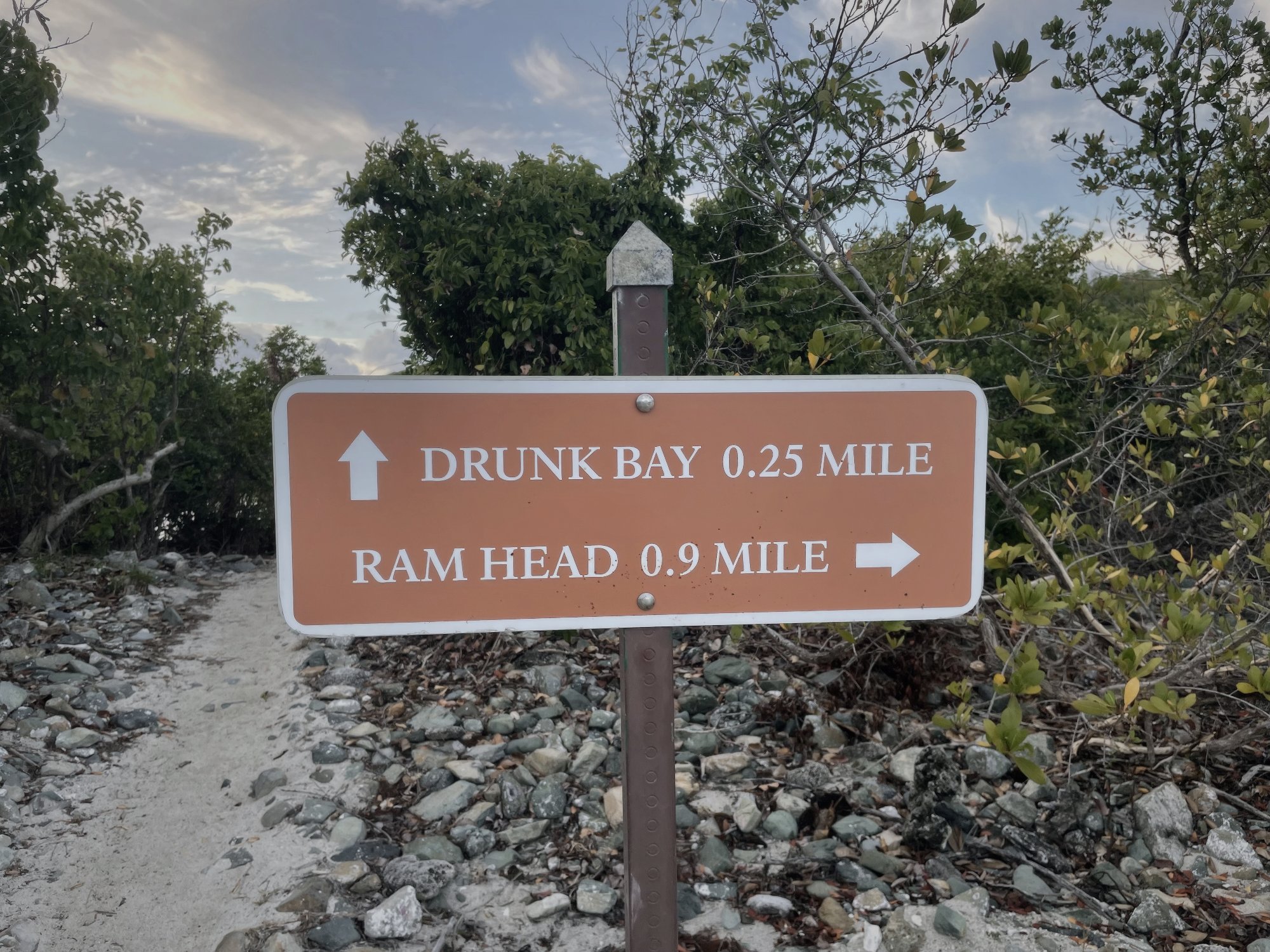
Trail junction sign at Salt Pond Bay marking distances to Drunk Bay and Ram Head
Go early, carry more water than seems necessary, and wear shoes with actual grip. Those points sound basic, but Ram Head is exactly the kind of short trail people underestimate because the mileage looks modest on paper. By late morning the sun is direct, the rock holds heat, and the open sections have very little protection from it.
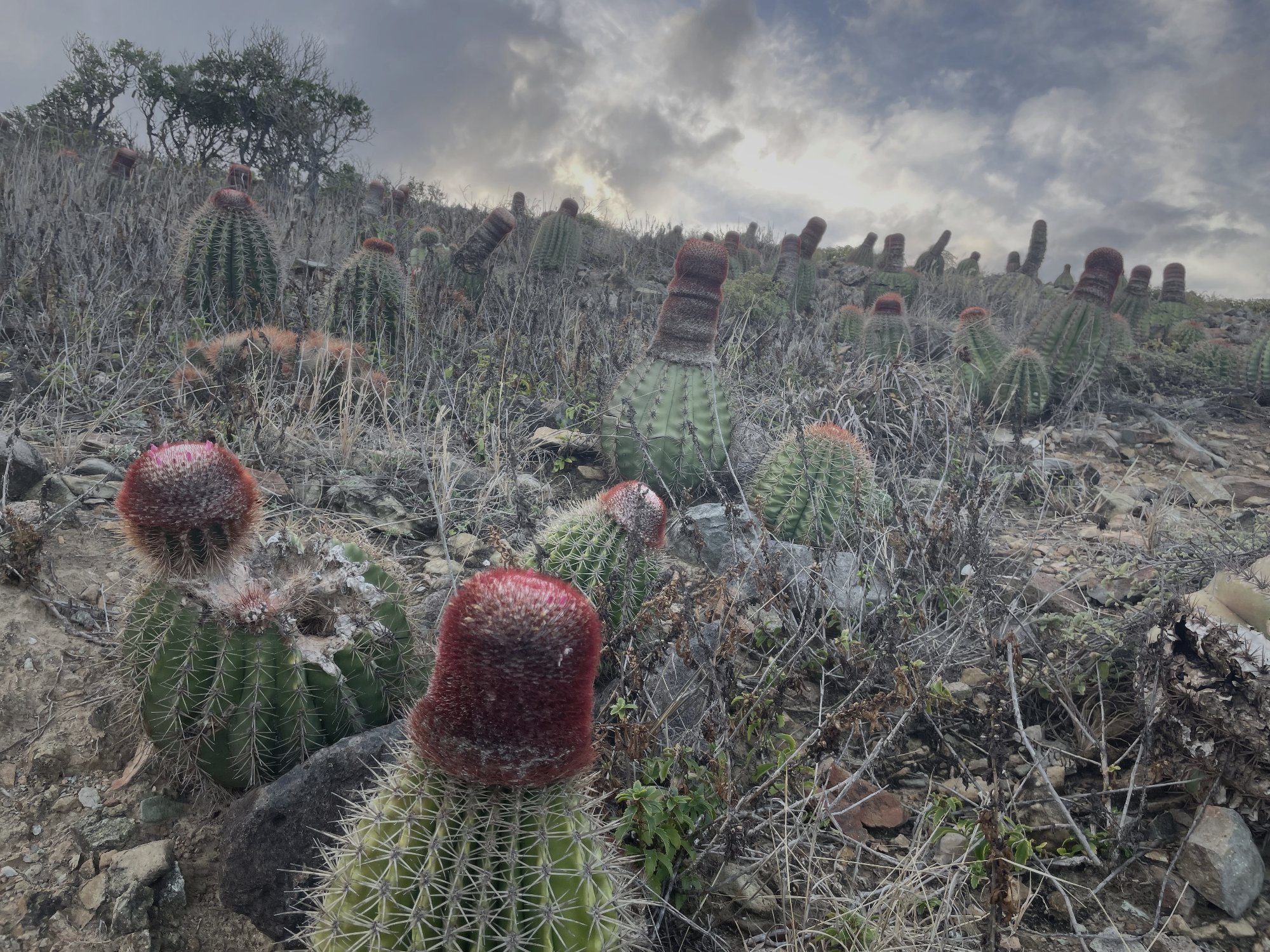
Barrel cacti on the dry hillside above the Ram Head trail on St. John
Drunk Bay is the shorter add-on. The place page for Salt Pond lists it at a quarter mile, and that is one reason the pairing works. You can do the beach, add Drunk Bay for contrast, and still decide whether Ram Head fits the day. That flexibility is useful for groups staying at Indo House because not everyone has to commit to the same level of effort. One group can head to Ram Head while another keeps the morning anchored around the beach.
The visual payoff is not the same on every section. Drunk Bay is more about texture and coastline than swimming. Ram Head is about exposure and viewpoint. The beach is the reset point between them. Thinking about the area as a three-part stop rather than one single attraction leads to better decisions once you are on site.
Getting to Salt Pond from Great Cruz Bay
Salt Pond is on the southeastern side of the island, past Coral Bay, which means this is one of the longer self-drive outings from Great Cruz Bay. It is not hard to reach, but it does ask for commitment. If you leave Indo House late in the morning, you lose the part of the day when the beach feels calmest and the trail is most manageable.
A rental car is the practical choice. As of April 2026, the Virgin Islands Department of Public Works lists a Salt Pond stop on St. John's Route 108 schedule, which confirms that transit service does reach the area. The limitation is flexibility. The timetable is fixed, and a beach-plus-trail day works better when you can leave on your own schedule, carry water, and decide in real time how long the hike and swim should be.
That is one of the quieter advantages of staying at Indo House. The villa's private parking makes early departures simple, and the full kitchen makes it easy to leave with water, fruit, or a packed lunch instead of depending on whatever may or may not be available once you are out there. For guests still mapping out arrival logistics and island driving, our guide on how to get to St. John covers the broader transportation picture first.
When Salt Pond Makes Sense for Indo House Guests
Salt Pond is the right call when you want a day with shape to it. Beach, short walk, bigger hike if the group wants it, then a return to Great Cruz Bay for a quieter afternoon. It is less useful when the only goal is easy water access, especially because Indo House already gives guests direct shoreline access without the drive or the parking lot.
That is the real tradeoff. Salt Pond offers a more specific landscape and one of the island's better short hikes. It does not offer the easiest day. If someone in your group wants the simplest beach stop, or if the trip schedule is already tight, north shore beaches usually ask less. If the group wants one outing that feels distinctly different from a standard beach morning, Salt Pond earns its place.
For many Indo House stays, the better rhythm is to use Salt Pond in the morning and let the villa carry the slower second half of the day. Swim or hike early, drive back before the midday heat starts dragging on the group, then spend the afternoon at The Villa instead of stretching the outing past the point where it is still enjoyable. That pacing is usually more successful than treating Salt Pond like an all-day base.
It also works well inside a broader list of things to do on St. John because it covers more than one type of experience without needing another stop. That is useful on a stay where some days stay close to the house and others go farther afield.
An Honest Assessment
Salt Pond asks more than many beach stops on St. John. The drive is longer. The walk in is real, even before the trail begins. The Ram Head section has very little shade and gets harder fast if you start too late. If someone in the group is only looking for a quick beach with services nearby, this is not the cleanest fit.
What comes back in exchange is a part of the island that still feels separate from the standard circuit. The landscape is drier, the coastline is rougher, and the beach-to-trail combination gives the morning more range than a swim stop alone. That is why Salt Pond remains one of the stronger south shore outings for guests who want more than the easiest possible day.
Frequently Asked Questions
How far is Salt Pond Bay from Cruz Bay?
Salt Pond Bay is located near the southeastern corner of St. John, roughly 45 minutes to an hour from Cruz Bay by car depending on traffic and road conditions. The drive crosses the island via Centerline Road through Coral Bay, then continues south on a narrower road. The distance and drive time are among the reasons Salt Pond Bay sees fewer visitors than North Shore beaches — it requires commitment to reach, which is part of what makes it worth the effort.
Are there facilities at Salt Pond Bay?
Facilities at Salt Pond Bay are minimal. There are no permanent restrooms, no food vendors, and no equipment rentals at the beach. The parking area is a simple unpaved lot. Visitors should bring everything they need — water, food, sun protection, snorkeling gear — and plan for a self-sufficient visit. For travelers coming from Great Cruz Bay or Cruz Bay, this means preparing before you leave, not on arrival.
Is Salt Pond Bay good for snorkeling?
Yes. Salt Pond Bay offers some of St. John's better shore-accessible snorkeling, with rocky areas at the edges of the bay supporting healthy reef life. The water is typically clear, and the relative lack of foot traffic compared to North Shore beaches means the marine environment is less disturbed. The rocky outcroppings on both sides of the bay are the primary snorkeling areas; the central sandy section is better for swimming and wading.
What is the Ram Head trail like at Salt Pond Bay?
Ram Head is a short but exposed coastal trail that begins near the Salt Pond Bay parking area and climbs to a rocky headland with views extending toward the British Virgin Islands and St. Croix on clear days. The trail crosses dry cactus scrub, and the final approach involves some scrambling over rocky terrain. It takes roughly 45 minutes to an hour round-trip at a moderate pace. The views from the point reward the effort, and early morning or late afternoon visits offer the best light.
Related reading
More from the Journal
Thoughtful guides and perspectives from St. John, written to help you plan with clarity and arrive more at ease.
A practical guide to hiking the Reef Bay Trail — petroglyphs, sugar mill ruins, the guided hike program, and what to know about parking and the return climb.