Diving in St. John, USVI is a boat activity. Nearly every site sits offshore on the cays and rock formations between St. John and St. Thomas, and Low Key Watersports, on Bay Street in Cruz Bay, runs daily trips to them. Visibility typically runs 60 to 100 feet, and a two-tank trip takes three to four hours.
St. John is not the Caribbean's deepest or most dramatic dive destination, and this guide says so plainly. What it offers is moderate-depth reef, swim-throughs, and a few walls within a short boat ride of Cruz Bay, which makes it workable for a first dive and still worth the time for certified divers. Below are the conditions, the sites that come up most often, how booking works, and where the British Virgin Islands fit.
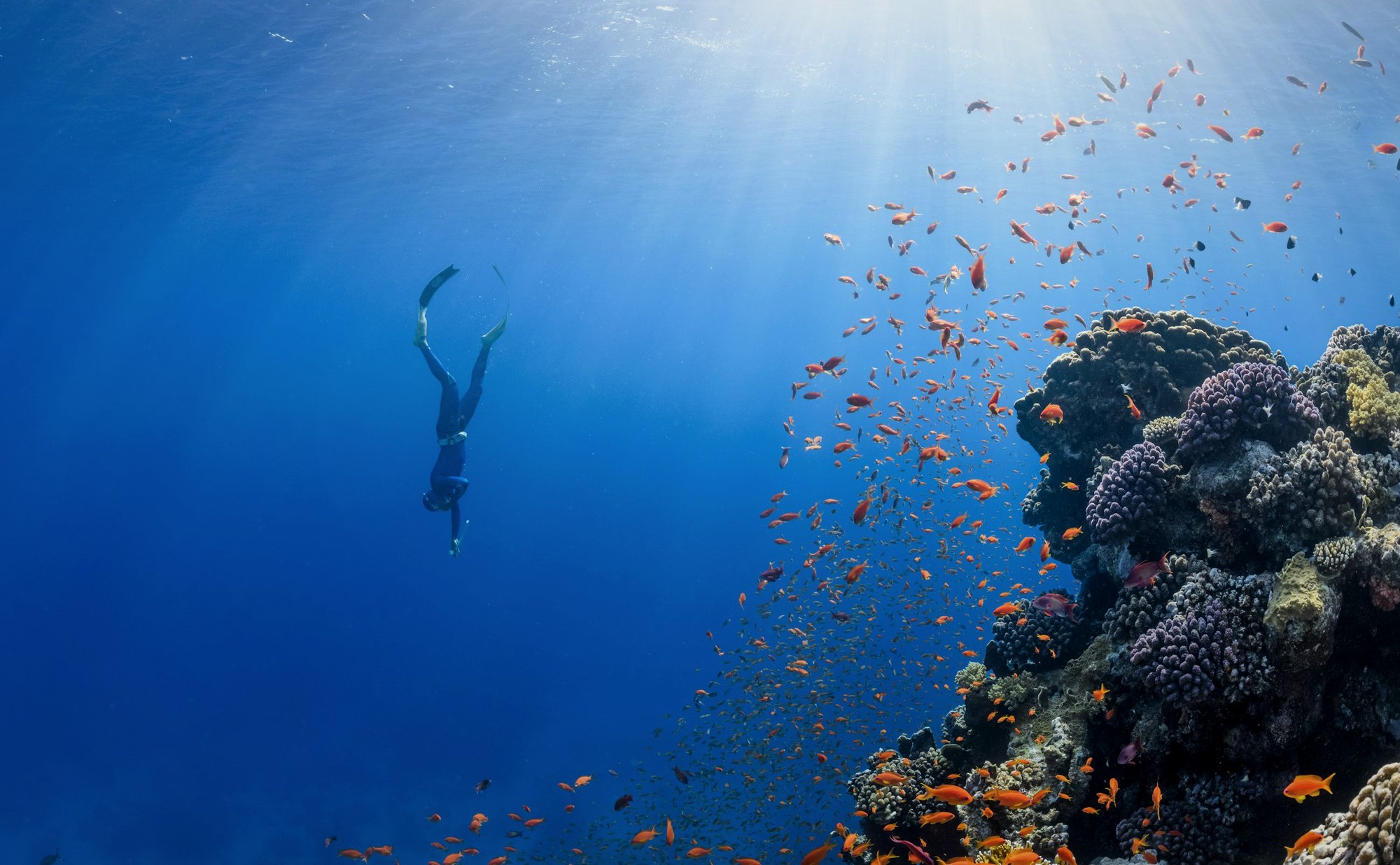
Single diver descending beside a coral reef wall in deep blue water, with schooling fish in the sunlight
Diving is possible year-round, with visibility averaging 60 to 100 feet and water temperatures that run from the high 70s in winter to the mid-80s in summer. A 3mm wetsuit or shorty is the usual recommendation, and shorties are the common choice.
Weather matters more than the calendar for individual sites. Hurricane season runs July through October and can cancel trips outright; our guide to hurricane season covers how that plays out for visitors. Exposure is the other variable. Eagle Shoal, off the south shore's east end, is open to the ocean on all sides and gets difficult in the prevailing southeast swell, so it is a calm-day site.
The Main Dive Sites Around St. John
Five names come up most often in operator listings and dive guides: Congo Cay, Cow and Calf, Carval Rock, Eagle Shoal, and Grass Cay. Tektite, in Greater Lameshur Bay, is a sixth with an unusual history.
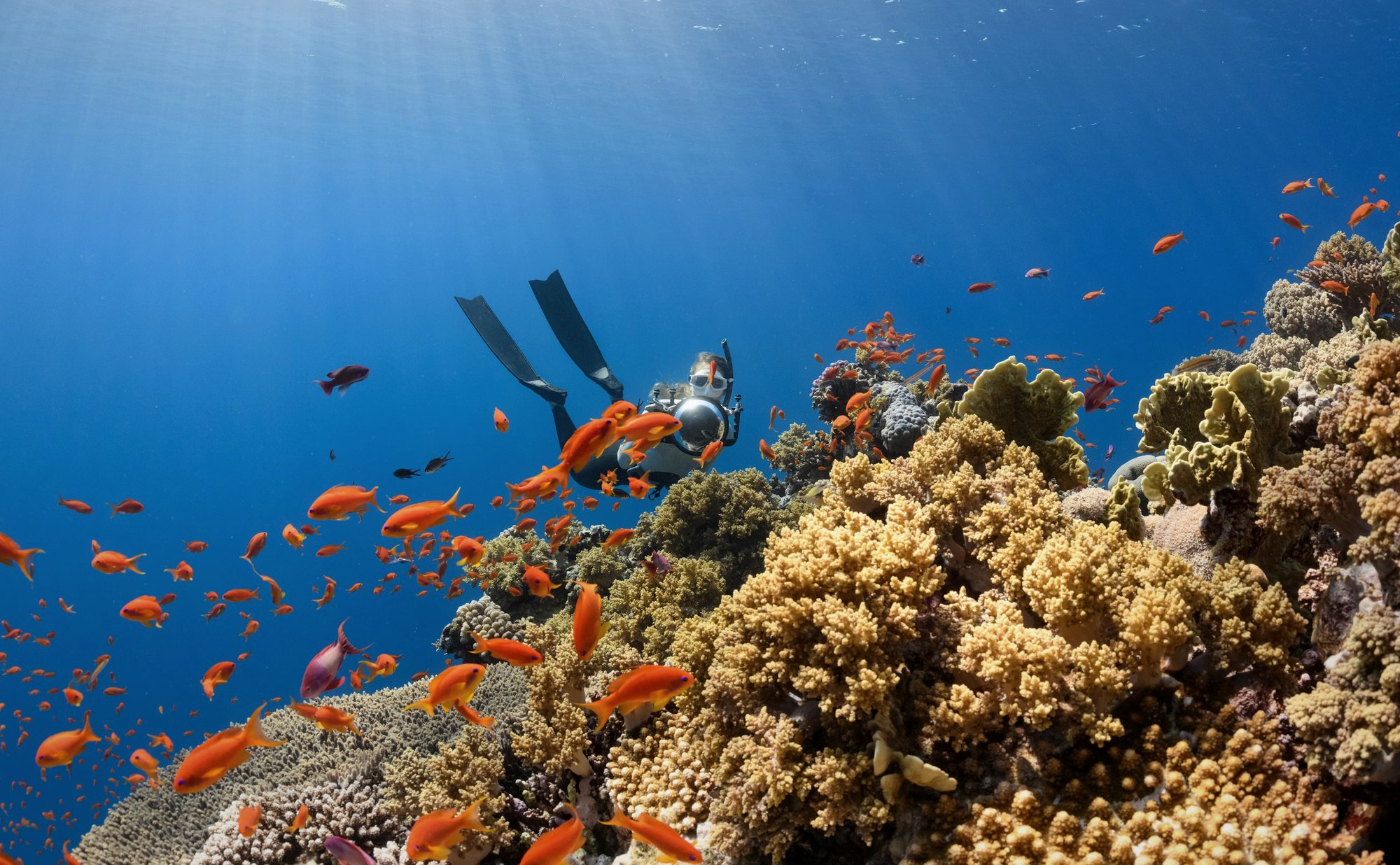
Hard coral and schooling reef fish on a shallow reef
Congo Cay
Congo Cay is the most forgiving of the group. The dive starts in a sand channel where southern stingrays rest, then follows a coral-covered wall through depths of 25 to 80 feet, with the strongest formations between 35 and 60 feet. The cay lies northwest of St. John, just west of Carval Rock, and is generally cited as a good site for newer divers.
Cow and Calf
Cow and Calf tops out around 45 feet, with arches, canyons, and swim-throughs, and can be reached from either St. John or St. Thomas. Cow Rock has a tunnel full of silversides that ends in a vertical exit known as the Champagne Cork, where surge pushes divers up through the opening. Shallow depth means long bottom times.
Carval Rock
Experienced divers tend to rank Carval Rock first. Current runs hard through a shallow cut on the south side, and beyond it the rock drops to roughly 80 feet. Tarpon work the baitfish along the wall, and nurse sharks and octopus turn up. It is an intermediate-to-advanced dive and not one to book for a first day in the water.
Eagle Shoal and Tektite
Eagle Shoal sits just off Coral Harbour near Ram Head, at about 50 feet, with caves and channels holding spiny lobster, jacks, and queen triggerfish. Its signature feature is the Cathedral, an open chamber where sunlight comes through as a skylight. Tektite, at about 50 feet in Greater Lameshur Bay, was the site of a 1969 underwater habitat study run by NASA, the Interior Department, and the Navy, and its coral-encrusted tunnels and ledges remain a dive site.
Grass Cay
Grass Cay lies between Thatch and Mingo Cays on the northwest side of the island. It is a favored night-dive site, when lobsters, crabs, and octopus come out. By day the dive starts around 55 feet over a reef with abundant fish.
Booking a Dive Trip from Cruz Bay
Low Key Watersports, at 1 Bay Street in Cruz Bay, runs a two-tank trip to reef sites on St. John's north and south shores and the outlying islands, listed from $165 for three to four hours. Certified, student, and first-time divers can all join it. The phone number is (340) 693-8999.
Dive trips run by boat rather than from shore
The same operator lists a one-tank night dive from $140 for certified divers, an Adventure Dive Day from $180 for experienced certified divers aged 15 and over, and multi-day packages from $465 with six, eight, or ten tanks. Most trips accept ages 10 and up. Listed rates are starting prices, so confirm current pricing when you book.
The operator's own listing names no fixed sites. The plan depends on conditions and on who is aboard, so ask which sites are planned when you reserve, and mention your certification level and recent dive count. Confirm the departure point at the same time.
One scheduling note for anyone flying home from St. Thomas: the Divers Alert Network recommends a minimum surface interval of 12 hours before flying after a single no-decompression dive, and 18 hours after repetitive dives or several days of diving. Plan the last dive for the day before departure, not the morning of.
Certification and First Dives
Low Key's PADI Discover Scuba Diving session starts from $200 for three to four hours and needs no experience. It is a supervised try-dive at shallow depth rather than a certification, so it does not qualify you for sites like Carval Rock. Anyone who wants to certify can take PADI Open Water through the same shop, which also teaches Advanced Open Water, Rescue Diver, Divemaster, and specialty courses.
Where St. John Diving Falls Short
The honest summary is that this is a modest dive destination by Caribbean standards. Most sites sit between 25 and 80 feet, the wreck diving sits off St. Thomas and in the British Virgin Islands rather than St. John, and the terrain is rock and cay reef rather than long continuous walls. Trips run on set schedules, weather can reshape or cancel a plan, and a two-tank trip costs meaningfully more per person than a day on the water with a mask.
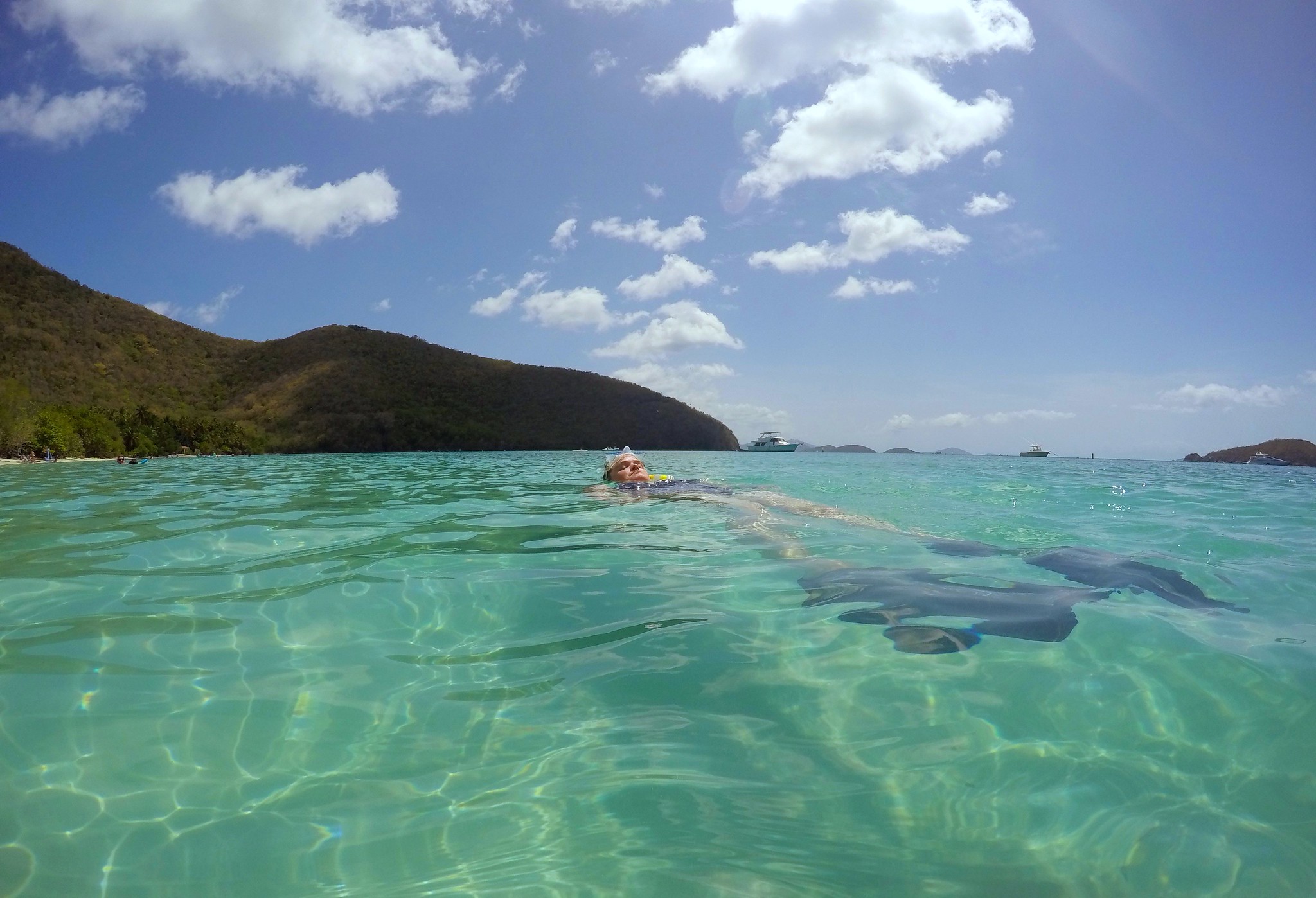
For many visitors the trade is a fair one to skip. The reefs at Waterlemon Cay and Maho Bay are shallow enough to see from the surface, and our guide to snorkeling on St. John covers where. The wider list of things to do on St. John puts diving in context with the rest of the island.
The Rhone and Dives Beyond St. John
The RMS Rhone, a 367-foot Royal Mail Ship that sank in a hurricane on October 29, 1867, lies off Salt Island in the British Virgin Islands and is one of the Caribbean's most popular wreck dives. It is not a St. John dive. Reaching it means crossing into BVI waters, so carry your passport and ask the operator whether a Rhone trip is running during your dates.
On the US side, the nearest wreck dive is WIT Shoal II, a 330-foot former tank landing ship resting upright in about 90 feet of water near St. Thomas. It is an intermediate dive and a separate booking from a St. John trip.
From Indo House
Cruz Bay is roughly five minutes from Indo House in Great Cruz Bay, so a dive trip does not mean a long transfer from the villa. Indo House has no private dock, and boats leave from Cruz Bay, which means driving in, parking at Lumberyard St. John (complimentary for guests), and walking to the departure point.
Guests who prefer not to manage this can ask the concierge to book a dive or private snorkel charter. Indo House can also arrange a day on the water with its boat captain, Xande, for those who want snorkeling without a dive schedule.
Frequently Asked Questions
Do you need to be certified to dive on St. John?
No. A Discover Scuba Diving session from Low Key Watersports, starting from $200, takes first-time divers aged 10 and over into shallow water with an instructor. Certified divers join the standard two-tank trip, and deeper sites like Carval Rock are intended for intermediate and advanced divers.
Which St. John dive site suits beginners?
Congo Cay and Cow and Calf are the usual answers. Congo Cay offers a sand channel with stingrays and a coral wall at moderate depth, and Cow and Calf stays at or above 45 feet. Carval Rock and Eagle Shoal are better left until you have more experience.
How much does diving on St. John cost?
Low Key Watersports lists a two-tank dive from $165, a one-tank night dive from $140, and Discover Scuba from $200. Multi-day packages start from $465. These are starting prices, so confirm current rates when you book.
What are visibility and water temperature like?
Visibility averages 60 to 100 feet. Water temperature runs from the high 70s in winter to the mid-80s in summer, and a 3mm wetsuit or shorty is the usual recommendation.
How long should I wait to fly after diving?
The Divers Alert Network recommends at least 12 hours after a single no-decompression dive and 18 hours after repetitive dives or multiple days of diving. Schedule your last dive for the day before you leave St. Thomas.
Related reading
More from the Journal
Thoughtful guides and perspectives from St. John, written to help you plan with clarity and arrive more at ease.
Virgin Islands National Park covers more than half of St. John. Which beaches and ruins to prioritize, what it costs, and how to plan a day from Cruz Bay.
Maho Bay Beach on St. John is a year-round sea turtle habitat. Green and hawksbill turtles feed in the seagrass shallows, often visible from the shoreline.