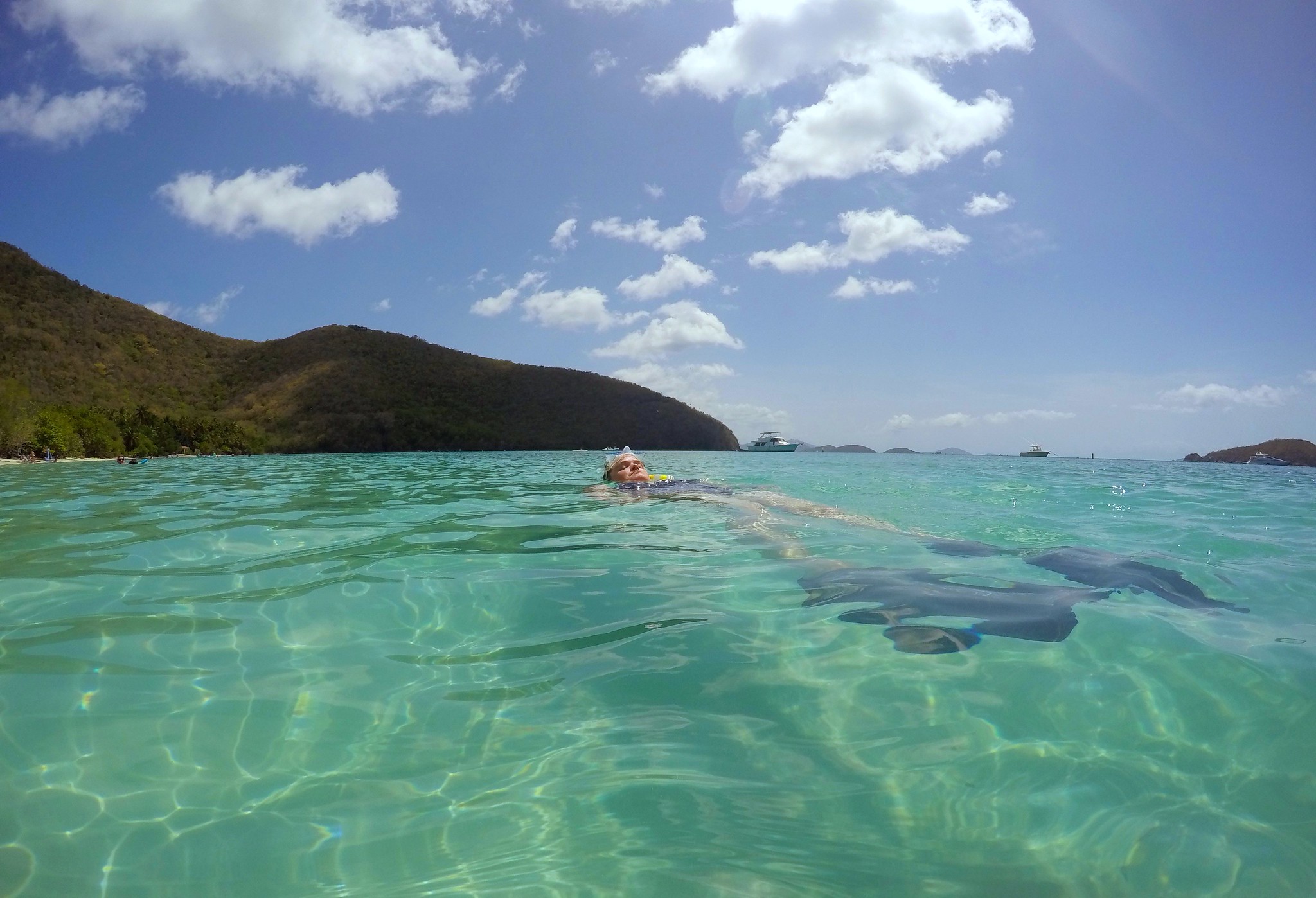
Virgin Islands National Park: What to See and How to Explore
Virgin Islands National Park covers roughly 58 percent of St. John, so most of what visitors come for, the north shore beaches, the hiking trails, and the sugar estate ruins, sits inside it. There is no entrance fee for the park itself. The one fee most visitors meet is $5 per person at Trunk Bay, and the park is open 24 hours a day.
From Indo House in Great Cruz Bay, the park's Cruz Bay Visitor Center is a short drive into town, and the north shore beaches begin just beyond it. This guide covers what the park contains, what it costs, which sites repay the time, and where it disappoints.
Hawksnest Beach in Virgin Islands National Park, white sand and shallow turquoise water beneath a sea grape tree on St. John
The park holds 7,259 acres of land and shoreline plus 5,650 acres of submerged waters, and the neighboring Virgin Islands Coral Reef National Monument adds another 12,708 acres of seafloor. Congress established the park in 1956, and UNESCO designated it a biosphere reserve in 1976. Dry tropical forest, which the park service calls the largest and most intact remaining in the Caribbean, covers much of the interior.
Estate ruins above the north shore, within the park
The practical consequence is that the park is not a single destination with a gate. It is a patchwork of beaches, trailheads, and historic sites strung along the north and south shores, linked by public roads. Visitors move between them by rental car, taxi, or safari bus, and the park service lists about 130 bird species, 400 reef-associated fish species, and more than 45 stony coral species among the residents.
Virgin Islands National Park Fees and Hours
Entering Virgin Islands National Park costs nothing, and neither does driving through it. The Trunk Bay day-use fee is $5 per person for ages 16 and over, from sunrise to sunset, and it is not waived on federal fee-free days. As of October 2026 the Trunk Bay booth accepts credit, debit, and contactless payment only.
The Cruz Bay Visitor Center, in Cruz Bay, is open Monday to Thursday from 8:15 a.m. to 4:00 p.m. and Friday from 8:15 a.m. to 1:30 p.m. It is closed on Thanksgiving, December 25, and July 4, and the park lists no weekend hours, so a weekend arrival means collecting maps on Friday or going without. The park's phone number is (340) 776-6201.
Boaters pay separately. An overnight mooring in the park costs $26 per night, paid through Recreation.gov, with stays capped at seven nights per bay.
Beaches Inside the Park
The park's most familiar beaches share the north shore, and they differ more than the photographs suggest. Trunk Bay has the most facilities and the day-use fee, Hawksnest Beach has its own small reefs, and Cinnamon Bay is the longest beach in the park.
Beach
What it offers
Facilities
Trunk Bay
225-yard underwater snorkel trail, about 0.3 miles of beach
Trunk Bay has no lifeguards despite its facilities. Those facilities run from 8:00 a.m. to 4:00 p.m., and the snack shack opens at 10:00 a.m. Cinnamon Bay's campground offers eco-tents, platform tent sites, and cottages, with reservations through the campground rather than the park service.
The Sugar Estates Inside the Park
The park protects the ruins of some of the 109 sugar plantations that operated on St. John, and the history they carry is more consequential than the stonework suggests. Annaberg, the largest sugar estate on the island, held more than 600 enslaved people at its peak. The windmill, animal mill, sugar factory, part of a rum still, and the foundations of the enslaved people's quarters remain. Docents are on site Monday to Friday from 10:00 a.m. to 2:00 p.m., November through April. The adjacent Leinster Bay shoreline is part of the National Underground Railroad Network to Freedom.
Catherineberg, on Centerline Road above Cinnamon Bay, is less developed than Annaberg, but its windmill and boiling house survive. The Reef Bay Sugar Mill was the last operating sugar mill on St. John and closed after a fatal accident in 1908. It can be reached only on foot or by boat, and much of its steam engine is still intact.
Reef Bay Sugar Mill ruins, reached on foot or by boat
Trails and Ranger Programs
The ranger-guided Reef Bay hike is the park's signature program: about 6 miles round trip over uneven, rocky ground, with check-in at the Visitor Center from 7:45 a.m. and a boat ride of roughly 40 minutes back to Cruz Bay. It requires a reservation through the park's booking link and carries a fee, and the park advises against booking if you cannot walk the full distance. Participants cannot park at the Visitor Center, which makes a ride from the villa or a taxi the simpler plan. Our guide to the Reef Bay Trail covers the route in detail.
For a shorter outing, the Ram Head hike runs just under 2.5 miles from the parking lot at Salt Pond Bay, over rocky, steep ground with little shade. Seasonal ranger-led dates are on the park calendar. Our overview of hiking on St. John sorts the other trails by difficulty.
From November through May the park runs a Night Sky program at Cinnamon Bay every other Wednesday at 8:15 p.m. Bring a flashlight, insect repellent, and long pants.
Where the Park Falls Short
The park is generous with land and thin with services. There is no park shuttle, so a day that combines Trunk Bay, Annaberg, and Maho Bay requires a car or a taxi. Parking at the popular north shore beaches is limited, so in high season an early start matters. There are no lifeguards even at Trunk Bay.
The Visitor Center's short Friday and absent weekend hours are another limit, as is the fact that fees, hours, and ranger schedules change. Confirm them with the park before a specific morning depends on them. Snorkelers who want something other than Trunk Bay's marked trail have Hawksnest's small reefs and the Maho Bay seagrass, and our guide to snorkeling on St. John compares the options.
Planning a Day From Great Cruz Bay
The sensible way to see the park is one cluster per day. A north shore day pairs an early beach, Trunk Bay or Hawksnest, with Annaberg and Leinster Bay before 2:00 p.m., when docents are on site in season. A south shore day pairs Salt Pond Bay with Ram Head. Safari bus drivers run two- or three-hour island tours from the Cruz Bay dock, with stops at overlooks and plantation ruins, which suits a first orientation.
Cruz Bay is roughly five minutes from Indo House, and the north shore road starts there. Guests who would rather not manage parking and timing can ask the concierge to arrange a driver or a guided hike. The wider list of things to do on St. John places the park among the island's other options, and Indo House is a quiet base to return to once the beaches fill.
Frequently Asked Questions
Is there an entrance fee for Virgin Islands National Park?
No. The park and the Coral Reef National Monument charge no entrance fee. Trunk Bay charges $5 per person for ages 16 and over, and mooring in the park costs $26 per night.
How much of St. John is national park?
About 58 percent of the island's land is managed by the National Park Service. The park covers 7,259 acres of land and shoreline plus 5,650 acres of submerged waters.
What are the Visitor Center hours?
The Cruz Bay Visitor Center is open Monday to Thursday from 8:15 a.m. to 4:00 p.m. and Friday from 8:15 a.m. to 1:30 p.m. It is closed on Thanksgiving, December 25, and July 4.
Do you need a reservation for the Reef Bay hike?
Yes. The ranger-guided hike requires a reservation and a fee, with check-in at the Visitor Center starting at 7:45 a.m. It covers about 6 miles round trip and ends with a boat ride to Cruz Bay.
Can you camp in Virgin Islands National Park?
Yes, at Cinnamon Bay Beach and Campground, which offers eco-tents, platform tent sites, and cottages. Reservations are made through the campground at (340) 714-7144, not through the park.
Related reading
More from the Journal
Thoughtful guides and perspectives from St. John, written to help you plan with clarity and arrive more at ease.
Maho Bay Beach on St. John is a year-round sea turtle habitat. Green and hawksbill turtles feed in the seagrass shallows, often visible from the shoreline.
Honeymoon Beach is one of St. John's quietest stretches of sand, reachable on foot from Cruz Bay or by water. Here's how to get there and what to expect.